
Fiber Marking & Coding
A Raycus Q-switched fiber source at 1064 nm marks bare metal directly — steel, stainless, aluminum, copper, gold and silver — plus engineering plastics such as PC, ABS and PVC. Supplied as an in-line flying coder, a desktop cabinet, or a battery-powered handheld unit.
Range
Formats & Power Options
Three formats share the same 1064 nm pulsed fiber source. Choose by how the part reaches the beam: moving along a line, placed in a cabinet, or too large to move at all.
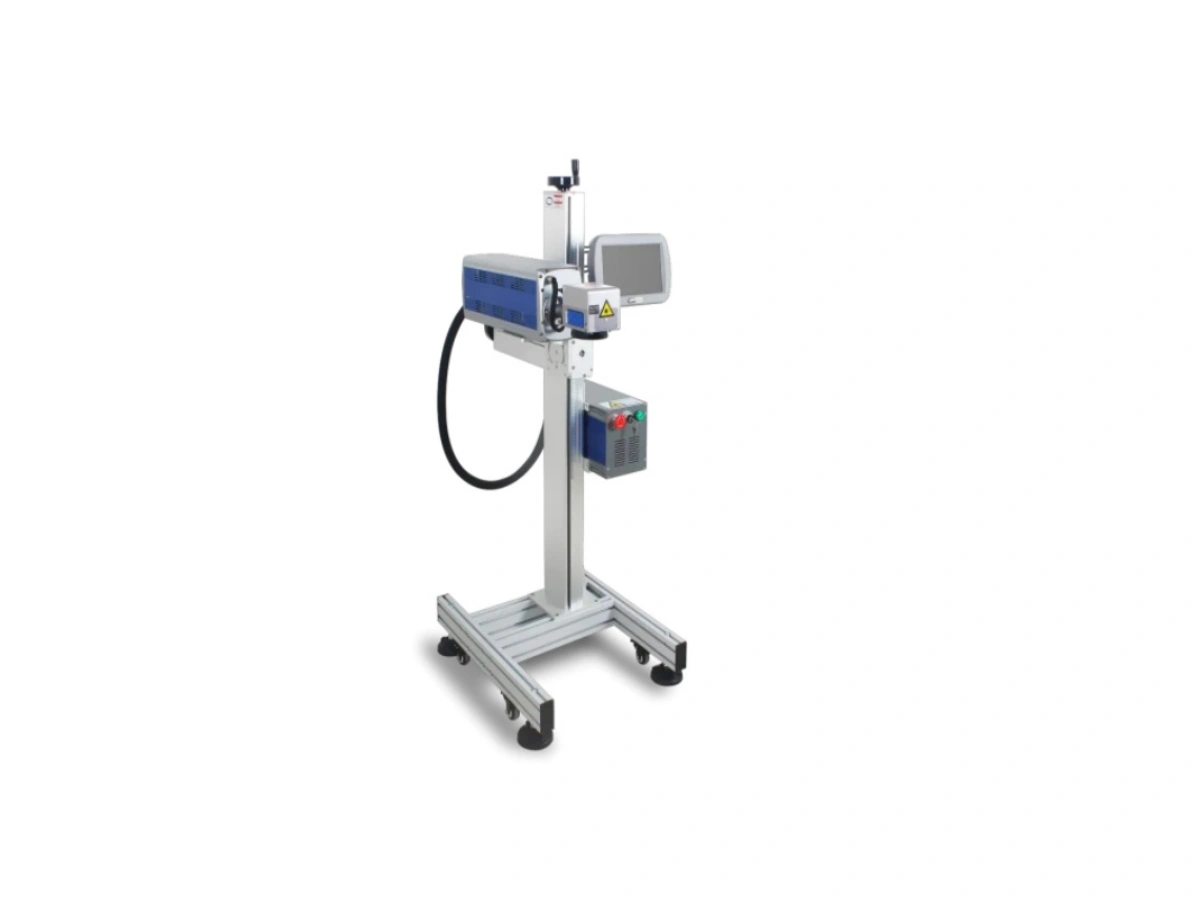
Flying fiber coder · 20–60 W
In-line coding onto a moving conveyor, reaching 200 m/min on single-line 2 mm characters. Raycus Q-switched source, 660 × 510 × 1460 mm, about 66 kg, built-in air cooling and a touch flying-marking controller.
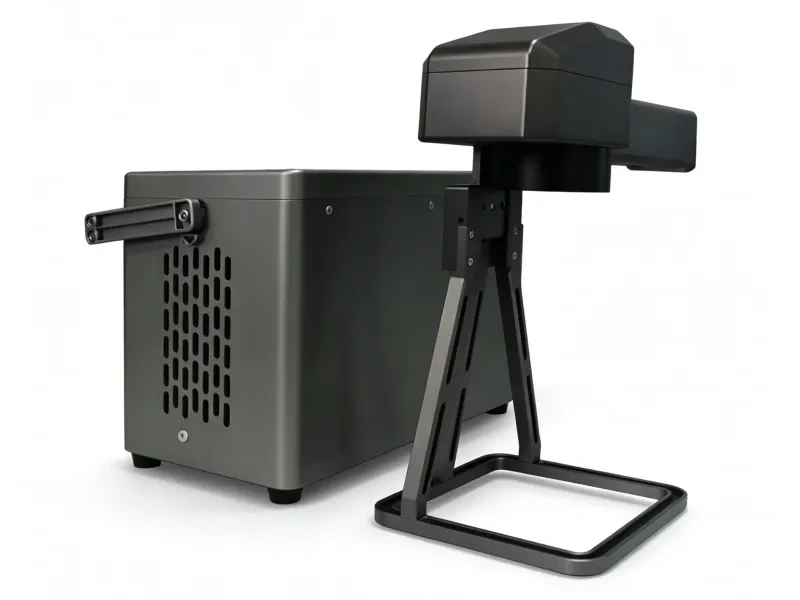
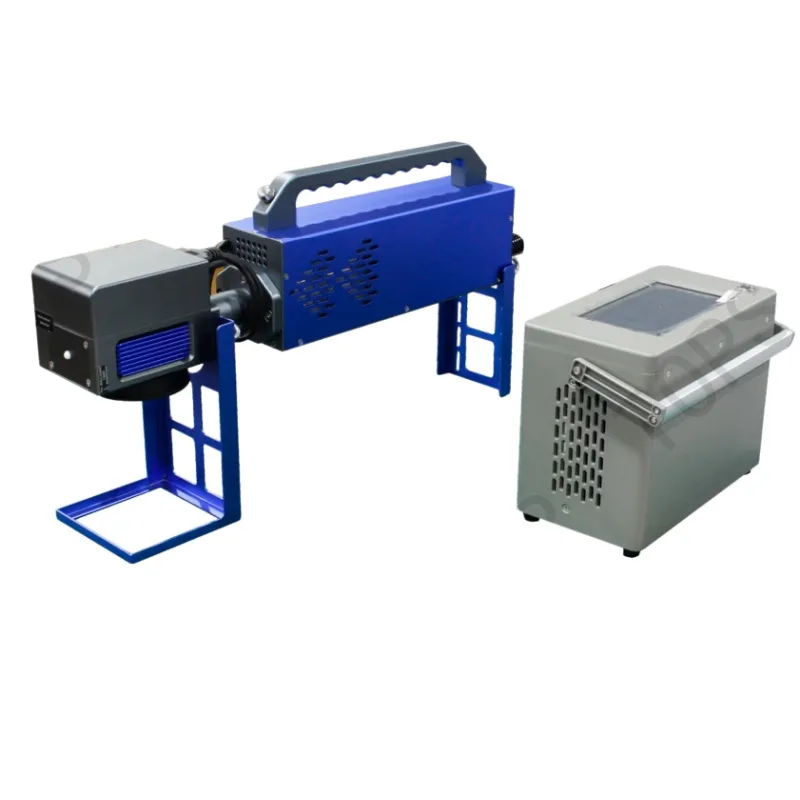
Desktop fiber marker · 20–100 W
A floor-standing cabinet at 800 × 600 × 1400 mm and about 75 kg. Raycus source, dual red-light metal galvanometer, industrial PC and display, Windows software, field 100–300 mm.
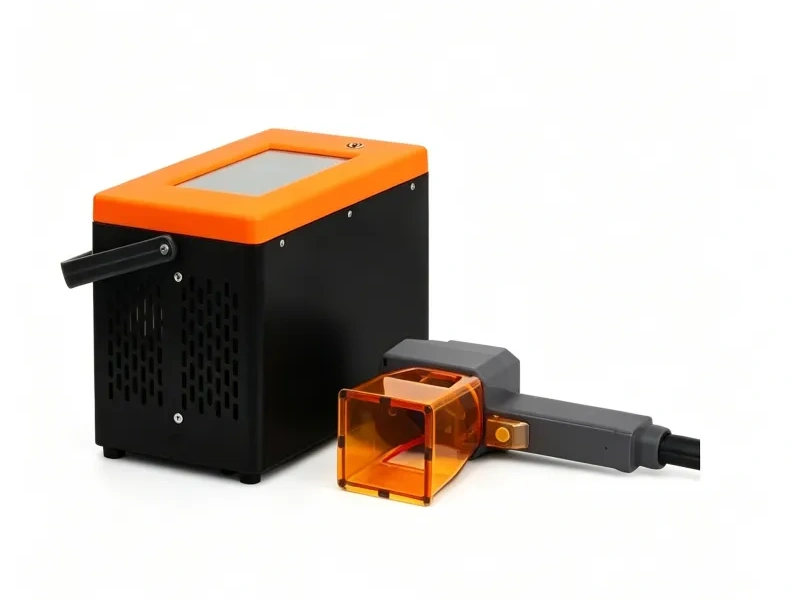
Handheld fiber marker · 20–50 W
A cordless unit on a 24 V lithium battery for 6–8 hours of use. The head weighs 1.25 kg and the complete unit 6–6.5 kg, with a 100 × 100 mm field and a Linux controller.
Why Fiber
Built for Permanent Metal Marking
At 1064 nm the beam couples directly into metal, so the mark forms in the surface itself — no ink, no etchant, no consumable, and nothing that wears off in service.
Iron, steel, stainless, copper, aluminum, gold and silver take the mark without pre-treatment, as do PC, ABS, PVC and PC+ABS blends.
The Q-switched pulsed fiber source is rated at roughly 100,000 working hours, with high peak power and a stable spot over that life.
The flying format keeps up with a running conveyor on single-line 2 mm characters, handling dates, batch numbers, barcodes and serial numbers.
The handheld format runs from a 24 V lithium battery, so the beam moves to the part instead of the part moving to the machine.
What It Is
What Is a Fiber Laser Marking Machine?
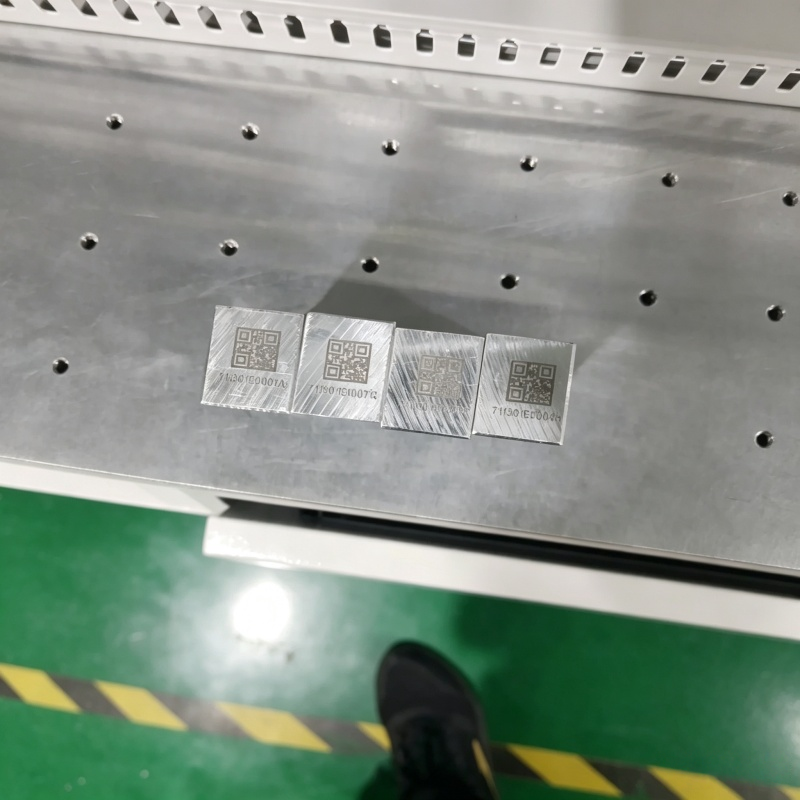
A fiber laser marking machine builds a 1064 nm pulsed beam in a doped optical fiber and steers it across the part with a galvanometer scan head. The metal surface absorbs the pulse and reacts — oxidising, melting or ablating a thin layer — so the mark is formed in the material rather than applied to it. That makes it permanent, non-contact and legible after heat, solvent and abrasion, which is why it is the default for serial numbers, VIN plates, medical instruments and traceability codes.
Specifications
Key Specifications & Performance
Figures below cover all three formats. Values are taken from the supplied documentation; field size and power are configured per application.
| Feature | Detail |
|---|---|
| Laser power | Flying 20–60 W · Desktop 20–100 W · Handheld 19.5 / 26.5 / 50 W |
| Wavelength | 1064 ± 5 nm |
| Laser source | Raycus Q-switched pulsed fiber |
| Beam quality M² | ≤1.4 to ≤2.0 depending on power |
| Pulse repetition frequency | 27–400 kHz depending on model |
| Output power stability | < 3% (100 W desktop < 5%) |
| Marking field | 100–300 mm on flying and desktop · 100 × 100 mm handheld |
| Marking speed | ≤10,000 mm/s |
| Minimum line width | 0.1 mm |
| Minimum character height | 0.15 mm |
| Repeatability | ±0.002 mm on flying and desktop · ±0.005 mm handheld |
| Cooling | Built-in air cooling on all three formats |
| Power supply | 500 W / 220 V / 50 Hz (110 V available) · handheld 100–240 V |
| Machine weight | Flying approx. 66 kg · Desktop approx. 75 kg · Handheld 6–6.5 kg |
| Source design life | Approximately 100,000 working hours |
Field size, marking depth and achievable contrast depend on the material and on marking time. Machines are configured per application — send a sample specification and we will confirm the working figures.
Applications
Applications & Use Cases
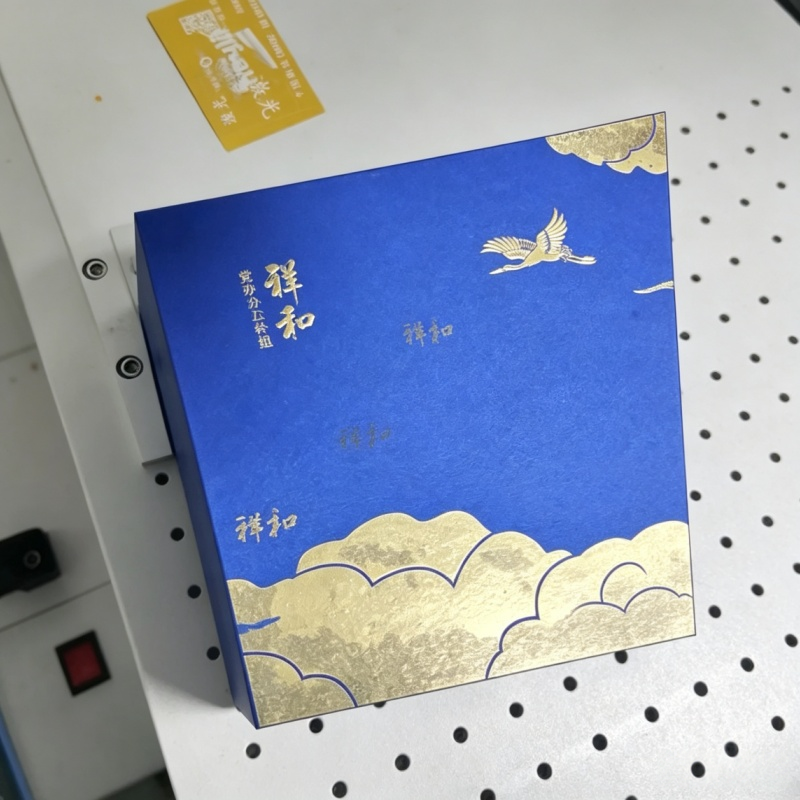
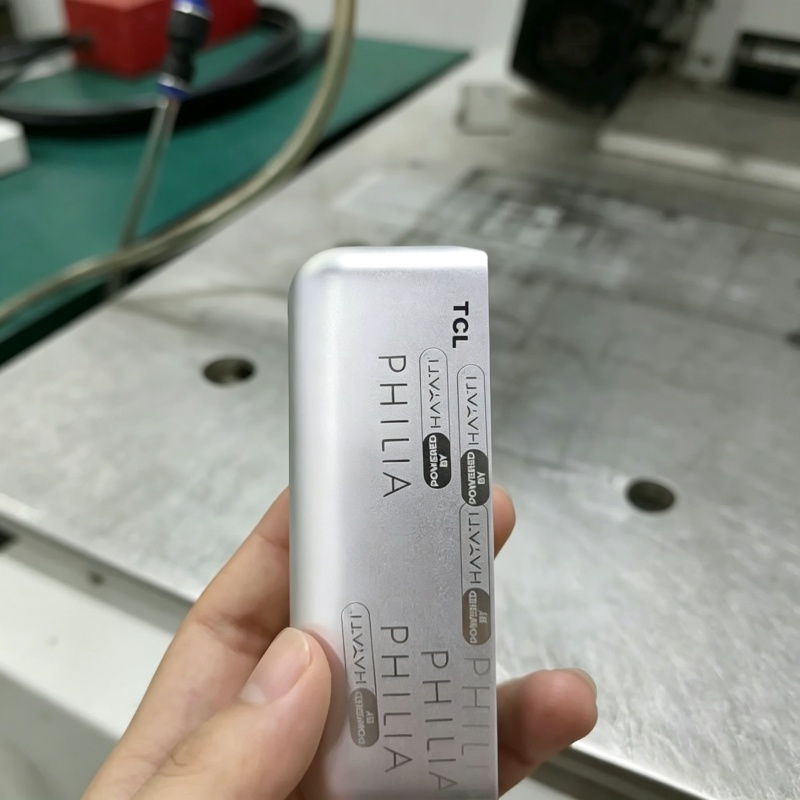
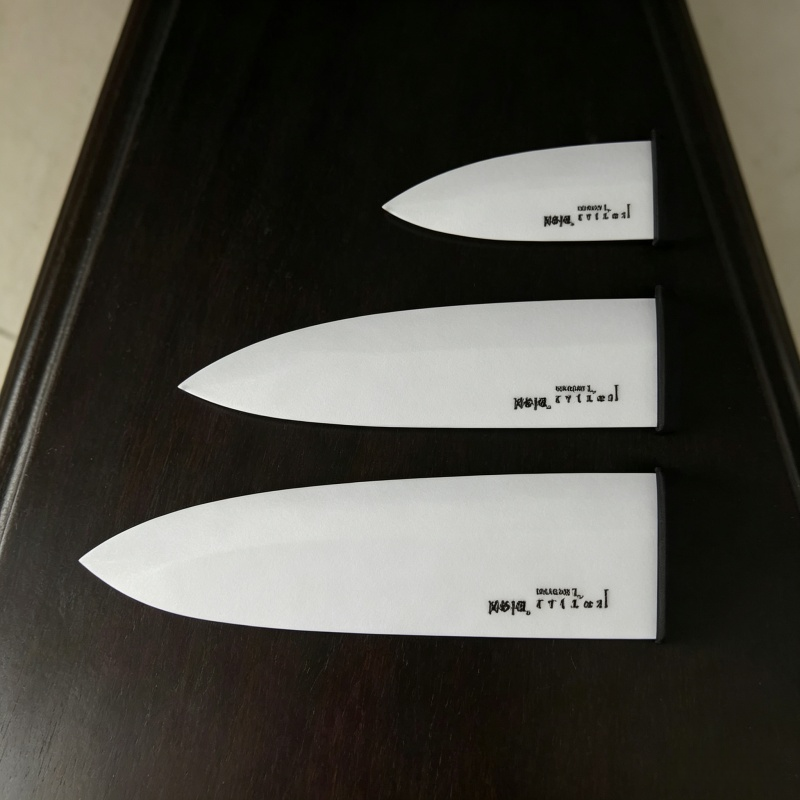
Fiber marking is used wherever the mark has to stay legible on metal through machining, heat, cleaning and years of service.
Comparison
Comparison & Selection Guide
Three questions decide the format: does the part move, does it fit a cabinet, and how fine does the mark need to be.
Power sets throughput and mark depth rather than the range of metals it will mark. If you are unsure, send a sample part and a target cycle time.
Compliance
Certifications & CE Compliance
Machines are CE marked, with CE documentation supplied with each shipment.
Installation
On-site or remote on-boarding for your team.
Training
Operator training on setup, file preparation and daily checks.
After-sales
Ongoing support and spare parts, worldwide.
1-Year Warranty
One-year warranty with installation, training and after-sales support.
Get Started
Get a Quote on Your Fiber Marking Machine
Tell us the material, the mark content and your line speed, and we will specify the format, power and field size to match.