
Overview
Glass is where source choice matters most. UV marks it cold with fine, crack-free detail; CO2 leaves a frosted surface mark. The right one depends on the part and the look you need.
Why UV (and CO2) Work on Glass
UV at 355 nm marks cold, so cracking and melting risk drops sharply and detail stays fine — down to 0.01 mm line width on the ultra-fine build, ideal for vials, lenses and premium glassware. CO2 at 10.6 µm leaves a frosted, etched-look mark that suits decorative and industrial glass.
Built to Last
The mark is a change in the surface itself, not ink on top, so it resists handling and washing. Very aggressive abrasion can affect any surface mark over time — we’ll show you how your glass holds up on a sample.
Specs That Matter
UV 355 nm (ultra-fine, 0.01 mm line width) for crack-free detail; CO2 10.6 µm for frosted marks. Fields 100–300 mm, matched to the part.
How to Mark Glass
- Fixture the part and set the focus to the surface.
- Choose UV (fine, cold) or CO2 (frosted) and set parameters.
- Run a sample, check detail and edge quality, then save the recipe.
- Set repeat positioning and start the batch.
- Inspect and log first-article approval.
Applications
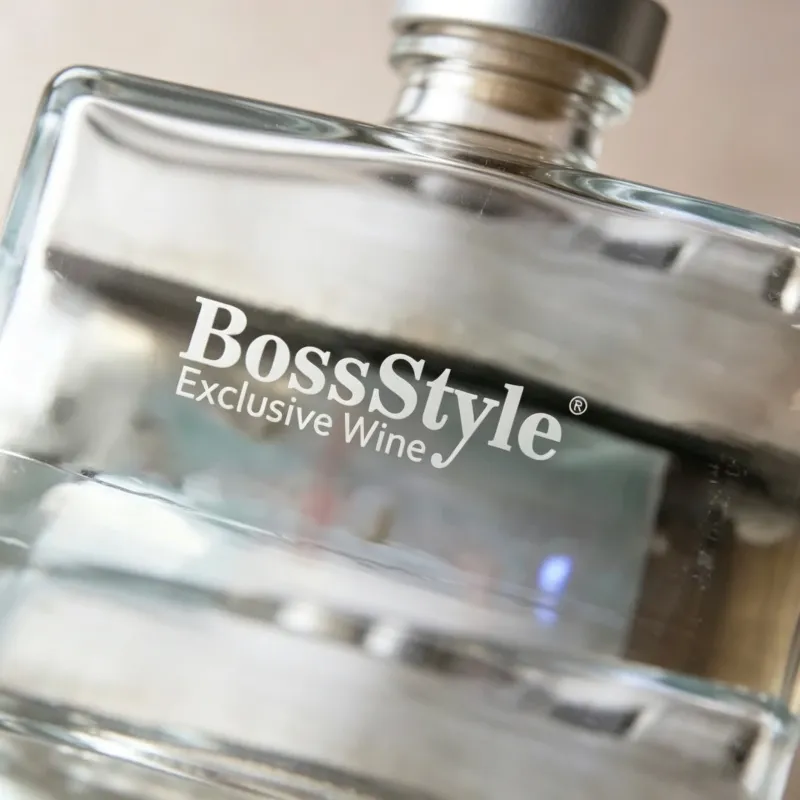
Glassware and bottles, lab vials, lenses, perfume and cosmetics glass, decorative and architectural glass.
CE Compliance
CE-marked, with conformity documentation available on request. We never claim SASO, SABER, GCC or UKCA we do not hold.
Getting It Right Before You Buy
Send us a glass part. We’ll mark it on UV (and CO2 if useful), show you both, then quote against the one you choose.
Request a Quote · Download the Spec Sheet
Explore: Non-Metal Marking. Related: UV Marking · CO2 Marking.
1-year warranty; installation, training & after-sales support available.