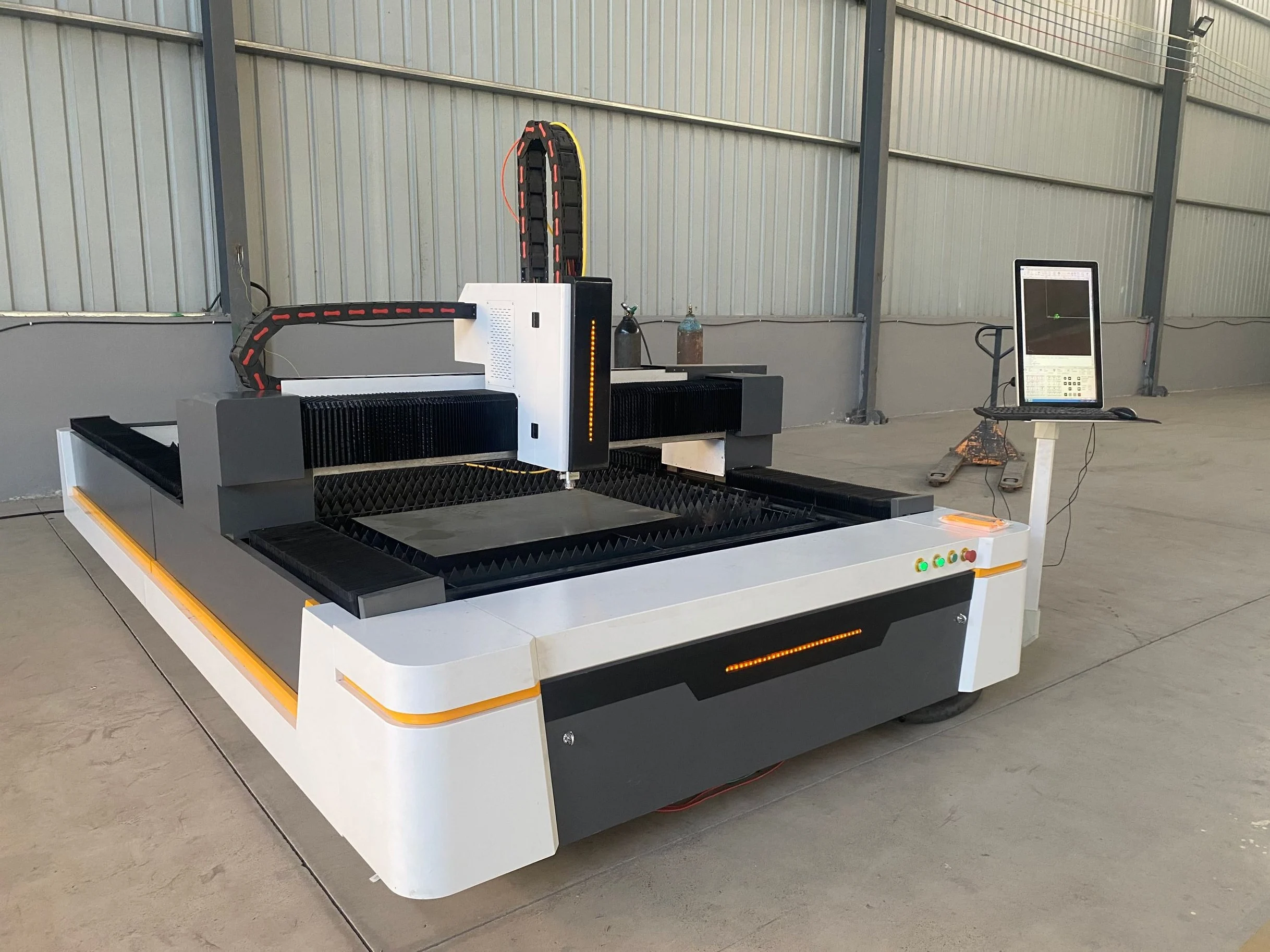
How CO2 Cuts Wood and MDF
Laser cutting timber uses a CO2 system tuned for plywood, MDF, hardwood, and veneer. The beam vaporises a narrow line and leaves a clean edge, so there is no sanding step and no tooling to swap between patterns. Power decides how thick you can cut and how fast; working area decides the largest panel you can lay down. For wood in particular, the air-assist and the focus setting matter as much as raw wattage, because they control char and edge color — details a furniture shop cares about as much as speed. This page is a guide to how it works and what to weigh.
What Drives Cut Quality on Wood
Three factors set the result. Thickness and speed follow from power; panel size follows from working area; and edge color — how much char shows — follows from air-assist and focus. On panel goods the priority is sheet area and throughput; on fine detail it is edge quality. The point is to match the setup to the work rather than to a single wattage number.
Wood Types & Considerations
| Wood type | Result | Notes |
|---|---|---|
| Plywood | Clean cut | Watch glue lines between plies |
| MDF | Smooth edge | Some edge darkening is normal |
| Hardwood | Varies with density | Denser stock cuts slower |
| Veneer | Fine detail | Ideal for intricate inlay work |
Typical Uses
The work here is commercial: furniture and joinery shops, sign and display makers, packaging and prototyping lines, and craft producers cutting at volume. One machine handles intricate patterns, repeat parts, and short runs without retooling, which is why laser cutting suits shops that change designs often.
Where Topstar Fits
Cutting wood is a CO2 job, a different process route from Topstar’s own line, which is fiber for metal — sheet metal, precision parts, and tube and profile. If your parts are metal, those pages are the place to start. If you need to mark wood rather than cut it — logos, batch codes, or engraving — a CO2 laser marker does that, and that is a machine we offer.
Certifications & Compliance: What to Check
Look for CE marking backed by a technical file and enclosure on any laser sold for export, prepared before shipment. CE covers the EU; where a destination also needs a SASO or GCC step, confirm that separately rather than assuming one mark clears every border.