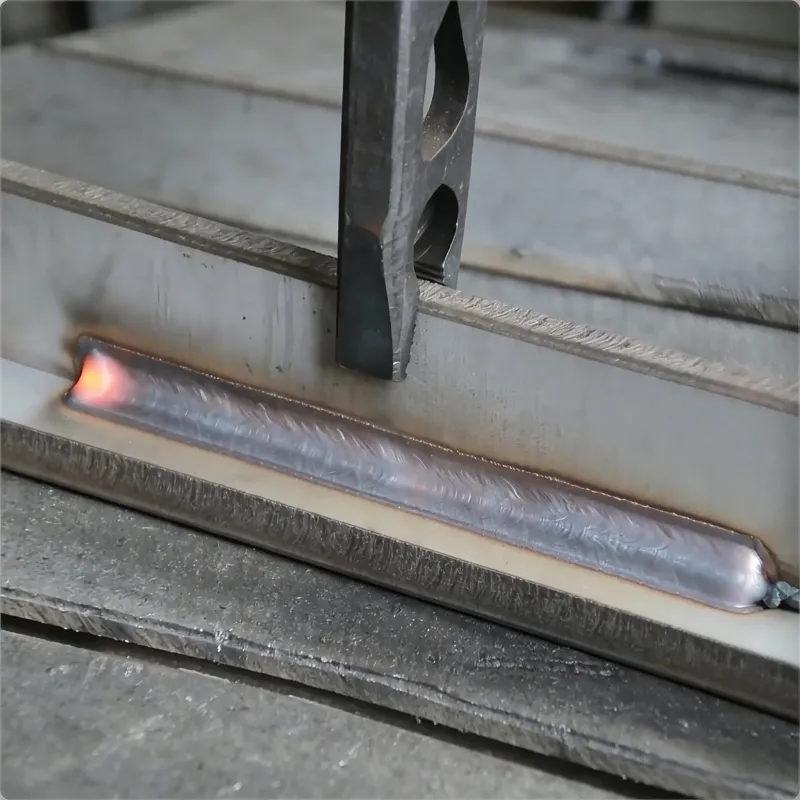
In short: Weld spatter is molten metal thrown out of the arc or the weld pool that lands and freezes on the part, the nozzle and the bench. It comes from an unstable transfer of metal into the pool, and the usual drivers are settings that do not match each other, the wrong shielding gas, too much wire stickout and dirty base metal. Fix those and most spatter goes away without any spray or grinding.
A little spatter is normal on MIG and flux-core work. A lot of it is a message: something in the setup is fighting the arc, and the same instability that throws droplets onto the plate can leave cold lap or lack of fusion in the joint itself.
Why Spatter Is Worth Fixing
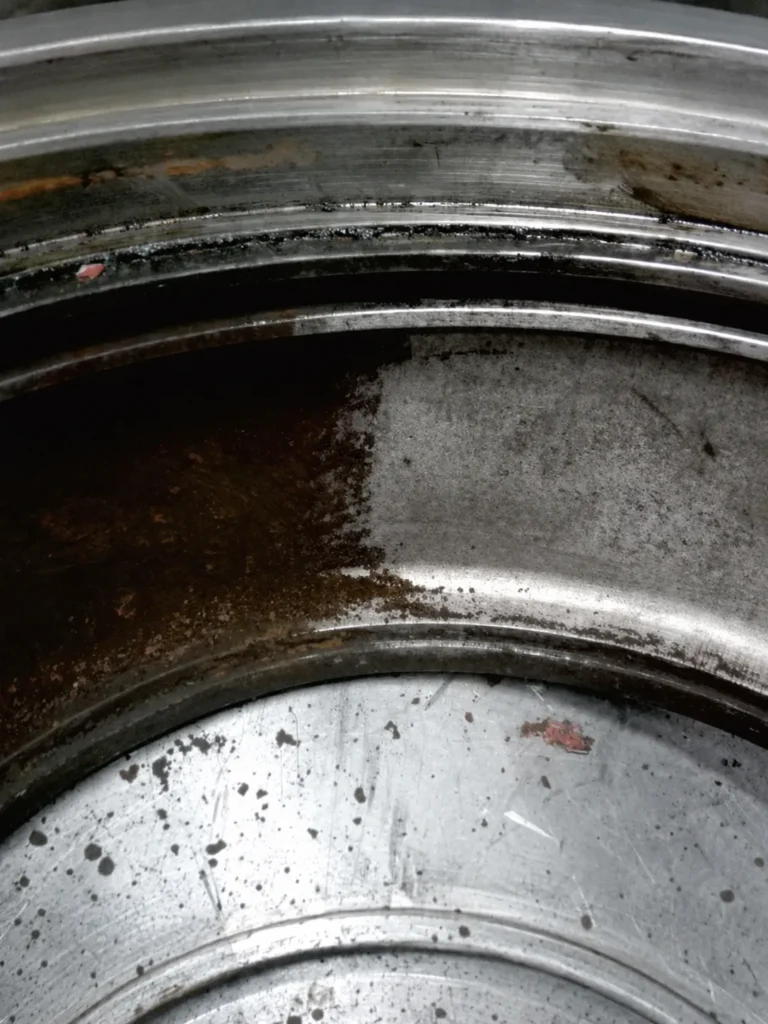
Spatter rarely weakens a joint on its own, but it costs time everywhere around the joint. Every ball that sticks has to be chipped, brushed or ground off before painting, because coatings crack and lift over it. On stainless, a stray droplet of carbon steel or a pit left by spatter can become a starting point for rust. Spatter that collects inside the gas nozzle narrows the gas stream, which is one of the quieter routes to weld porosity.
The sound of the arc usually gives the problem away before the bead does. A well-set short-circuit MIG arc gives a steady, even crackle. Irregular popping, with the gun being nudged back in the hand, means the wire is stubbing into the pool instead of transferring cleanly.
What Causes Spatter in MIG Welding
Most spatter questions are MIG questions, because the way metal crosses the arc in MIG is so sensitive to setup. In short-circuit transfer the wire touches the pool, shorts, and pinches off a droplet many times a second. When voltage, wire speed and inductance agree, that pinch is gentle. When they do not, the bridge bursts and scatters metal.
Voltage and wire speed out of balance
Voltage that is too low for the wire speed makes the wire jab into the plate and pop. Voltage that is too high stretches the arc and lets large droplets form and fly off. Turning one knob without the other is the most common cause of a sudden spatter problem.
Shielding gas
Straight CO₂ is cheap and penetrates well, but it pushes the arc toward globular transfer, where large irregular drops form at the wire tip and many of them miss the pool. An argon-rich mix runs smoother and, at higher settings, allows spray transfer, which produces very little spatter. Pulsed MIG goes further by detaching one droplet per pulse.
Stickout and gun angle
A long stretch of wire between the contact tip and the work preheats the wire and drops the current, and the arc wanders. A steep drag angle with solid wire also tends to throw more metal than a slight push.
Base metal, ground and consumables
Mill scale, rust, oil, paint and zinc coatings all boil or burn in the arc and kick the pool around. A ground clamp on rusty fixture steel far from the joint gives an unstable arc, and on DC it can cause arc blow, where spatter lands heavily on one side of the joint. A worn contact tip with an oval bore makes electrical contact erratic, and damp or rusty wire adds its own sputter. When spatter appears with a new spool or a new batch of plate, look at the consumable or the surface before touching the machine.
The way the two common arc processes compare more broadly is laid out in MIG vs TIG welding.
Stick, Flux-Core and Laser Welding
Stick welding spatters when the arc is held too long, when the current is set high, or when low-hydrogen rods have picked up moisture. Flux-cored wire generally spatters more than solid wire, and self-shielded flux-core more than gas-shielded. TIG barely spatters at all, because the filler rod is fed by hand at the edge of the pool and never travels through the arc.
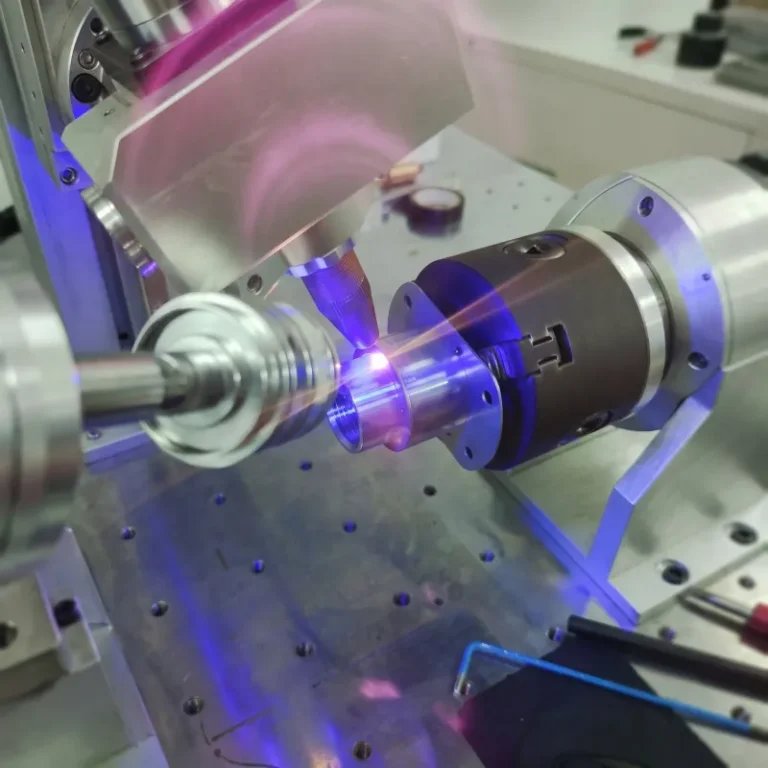
Laser welding is different again. Conduction-mode work on thin sheet throws very little, while deep keyhole welding can eject metal when the keyhole becomes unstable at high power density. Galvanized lap joints are the classic case: the zinc between the sheets boils and blows out through the pool, and leaving a small gap for the vapor to escape usually helps more than any change of power. Beam oscillation (wobble) widens and steadies the pool and is one of the main levers for spatter on laser welding machines.
How to Keep Spatter Down
Work through the cheap checks first, in roughly this order.
- Clean the joint to bright metal, including mill scale and zinc in the weld zone.
- Move the ground clamp to clean metal close to the joint.
- Replace a worn contact tip and clear the nozzle.
- Shorten stickout and use a slight push angle with solid wire.
- Balance voltage against wire speed on scrap before the real part.
- Switch from straight CO₂ to an argon-rich mix, or to spray or pulsed transfer where the job allows.
- Only then reach for anti-spatter spray or gel on the nozzle and around the joint, choosing a silicone-free product if the part will be painted.
On a laser, spatter that reaches the optics stops being a cleanup chore and becomes a running cost. Our handheld laser welders protect the beam path with two protective lenses held in a drawer, and each lens can be turned to a fresh spot six times before it is replaced. So a lens that has taken a spatter strike is rotated, not thrown away.
The accessory kit also ships with eight spare protective lenses and eight nozzles. That means the parts spatter wears out fastest are on hand from the first day.
If spatter is costing you cleanup time on a particular part, the joint type, the material and the coating usually point to the cause. Send those along with a photo of the bead, and we will suggest where to start. Show us the joint
Getting Spatter Off the Part
Loose spatter comes off with a scraper, a chipping hammer or a wire brush. Fused spatter needs a flap disc or a grinder, which costs time and leaves marks that may need blending. Anti-spatter compound applied before welding is what makes the difference between the two, because it stops droplets from fusing to the surface.
For light spatter and the discoloration around a finished seam, laser cleaning is an option that does not abrade the base metal; the process is covered under weld-seam cleaning. Heavy, fully fused spatter still needs mechanical removal first.
Common Questions
Does spatter weaken the weld?
Not by itself, since it sits on the surface. The unstable arc that causes heavy spatter can also leave poor fusion, so a joint that spattered badly deserves a closer look.
Can anti-spatter spray cause problems with painting?
Silicone-based sprays can, so use a water-based or silicone-free product on parts headed for paint.
Why does my MIG welder spatter so much on galvanized steel?
The zinc coating boils at a far lower temperature than steel melts, so it vaporizes ahead of the arc and blows through the pool. Grind the coating back from the weld zone, with fume extraction running, and the arc will settle.
How do I find the voltage that gives the least spatter?
Run short beads on scrap of the same thickness at a fixed wire speed, raising the voltage a small step each time. Stop at the setting where the arc sounds like a steady crackle and the bead wets into both toes, then weld the part.
Do laser welders produce spatter?
Yes, mainly in deep keyhole welding and on coated or dirty metal, while conduction welding on clean thin sheet produces very little.
Related
Equipment
Further reading
Get in touch
- Show us the joint, the material and the coating, with a photo of the bead.