
Overview
Metal laser marking shows up wherever a part needs a permanent ID that survives its working life — and that’s most industries.
Where It’s Used
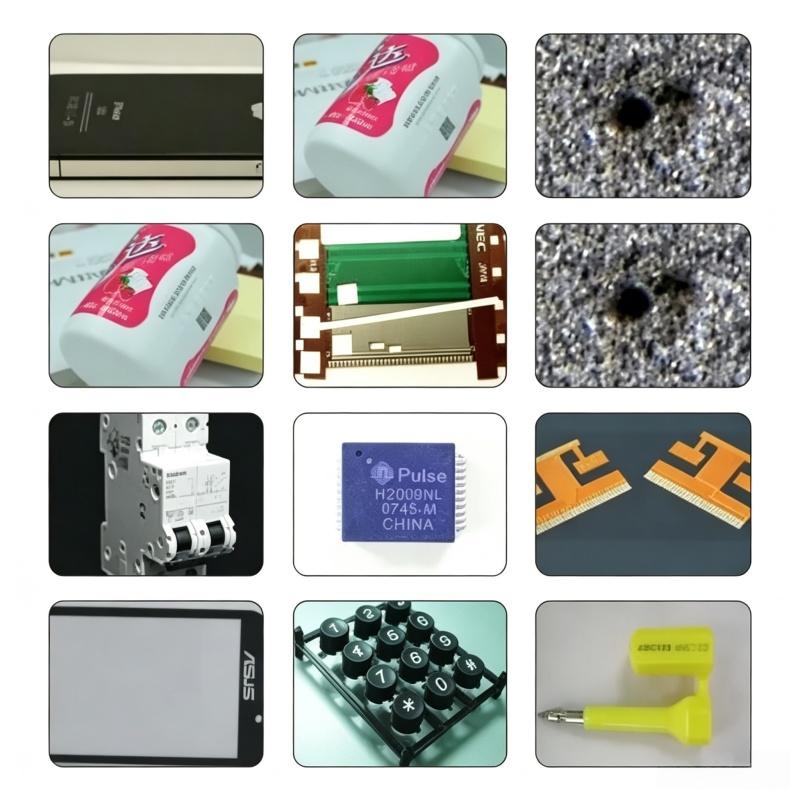
Automotive and machinery parts carry serials and traceability codes; medical instruments take corrosion-safe black-anneal marks; electronics and tools get logos and 2D codes; aerospace components need durable part numbers; fasteners, valves and fittings carry compliance marks. The common thread is permanence under heat, oil and handling.
Why Laser, Not Ink or Etch
The mark is in the metal, so it won’t smear, peel or wash off, costs almost nothing to run once installed, and reads reliably as a 2D code for years.
Specs That Matter
Fiber/MOPA 1064 nm, 20W–100W, up to 10,000 mm/s, ±0.002 mm repeat accuracy, fields 100–300 mm — matched to the part and volume.
How a Production Mark Is Set Up
- Load the part and set the focus distance for the lens.
- Import the mark file and set pulse, speed and frequency.
- Run a sample, check contrast and durability, then save the recipe.
- Fix the jig for repeat positioning and start the batch.
- Scan the codes and log first-article approval.
CE Compliance
CE-marked, with conformity documentation available on request. We never claim SASO, SABER, GCC or UKCA we do not hold.
Getting It Right Before You Buy
Send us a representative part. We’ll mark it, show you the result against your spec, then quote against it.
Request a Quote · Download the Spec Sheet
Explore: Metal Laser Marking. Related: Fiber Laser Marking · QR & Code Marking.
1-year warranty; installation, training & after-sales support available.