In short: Porosity is gas that was still in the weld pool when it froze. Every pore traces back to a supply route — shielding that stopped covering, something sitting on the metal, air trapped in a gap, or a pool that froze before the gas could leave — and the size, depth and pattern of the pores usually say which route before you change a single setting.
That is the part worth slowing down for. Chasing porosity by turning dials is the long way round, because the pores are evidence and reading them first narrows the search from everything to one thing.
What the Gas Actually Is
Molten metal holds far more dissolved gas than solid metal does. As the pool freezes, that gas comes back out of solution, and whatever cannot reach the surface in time is sealed in as a void.
Hydrogen does most of the damage, and it arrives from anything that carries it: moisture in an oxide layer, cutting fluid, grease, a fingerprint. Nitrogen and oxygen get in a different way, straight from air that reached the liquid metal before it froze. Aluminum is the extreme case. Hydrogen is very soluble in the molten metal and has almost nowhere to sit once it sets, so anything carrying hydrogen into the joint gets one chance to leave and is otherwise stuck there. That is why the prep routine counts as part of the weld rather than as preparation for it — the detail is in cleaning aluminum before welding.
Reading the Pores Before Changing Anything
Where the pores sit is more useful than how many there are.
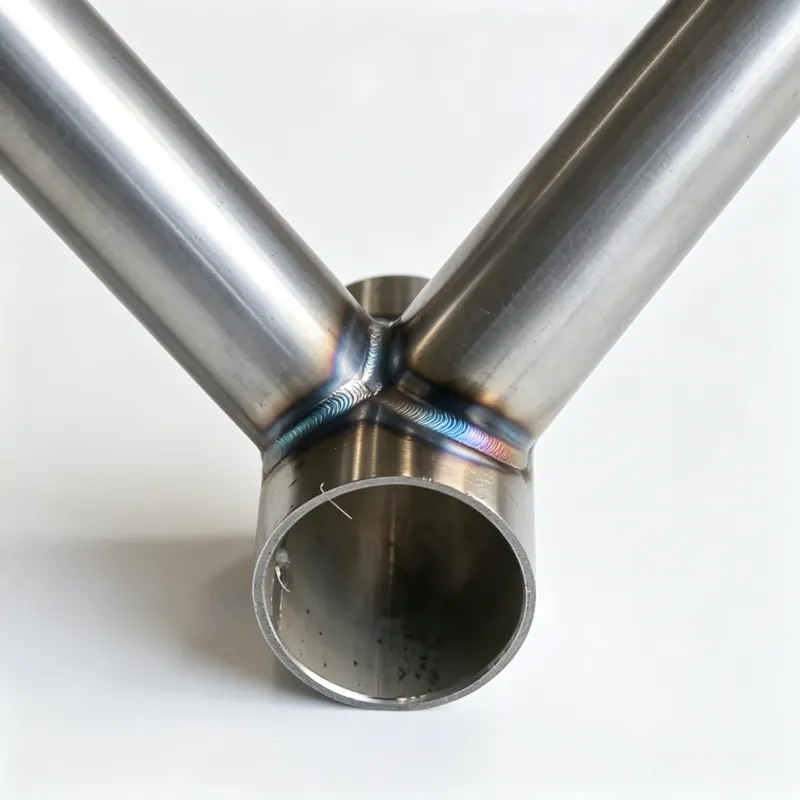
Spread evenly the whole length of the bead. A continuous source. Shielding coverage, or a consumable that is contaminated along its whole length.
Bunched at the start, or at the crater. Timing rather than supply. Gas that arrives after the arc or leaves before the pool has frozen.
A line of them following the joint line. The joint itself, not the setup: a gap holding air, or contamination that got sealed in instead of burned off.
Long and tapered, leaning toward the surface. Gas that was on its way out when the metal caught up with it. That points at freezing rate — travel speed and heat input — rather than at the gas supply.
Only on the last parts of a batch. Nothing about the settings. Something drifting: a bottle running down, a filter loading up, or parts that were cleaned too long before they reached the torch.
Where the Gas Gets In
Shielding that stopped covering. Flow set from habit instead of from cup size, a cracked cup, a nozzle packed with spatter, a draft crossing the bench, post-flow cut short. Each of these lets air at the pool while it is still liquid. The form each arc process takes is laid out in the arc-process comparison.
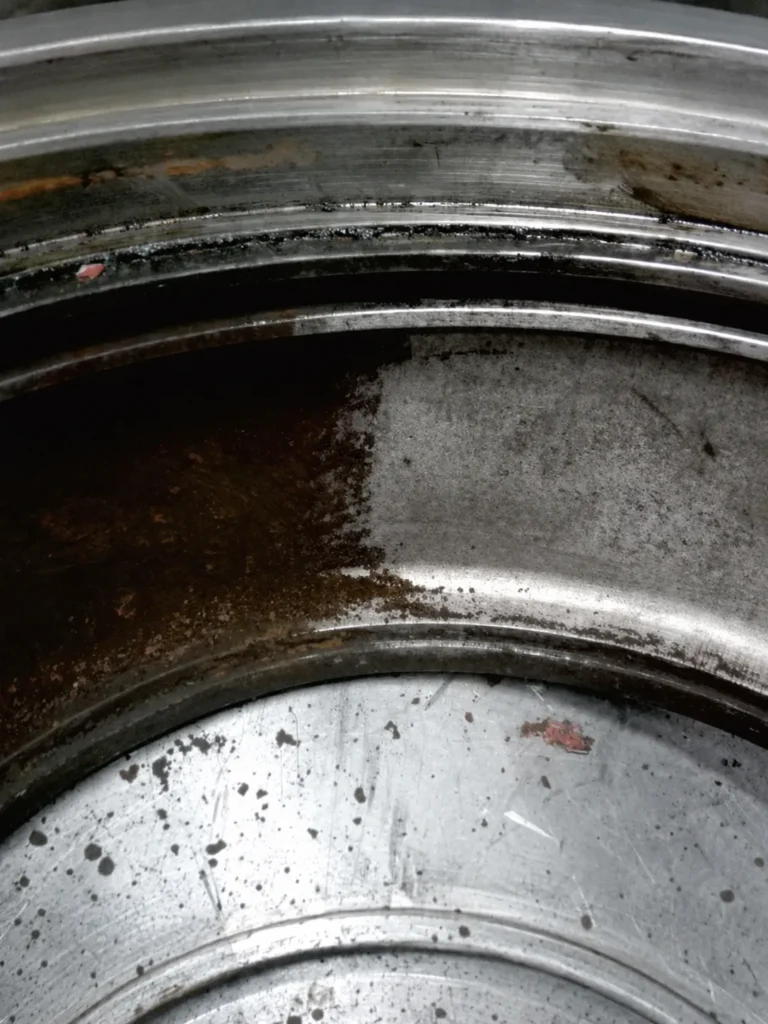
Whatever is on the metal. Oil, cutting fluid, paint, marker ink, mill scale and moisture all break down under the heat and hand their gas to the pool. This is the one that gets blamed last and causes the most rejects.
The gap in the joint. Air sitting in a gap has to go somewhere once the joint closes over it. This is why fit-up tolerance is a porosity specification and not only a fixturing one. On our 2 kW handheld machines the usable joint gap is 0.5 mm with the beam oscillating and up to 1.2 mm when filler wire is added, and that filler figure still has to stay under three-tenths of the plate thickness. Open the joint beyond that and no gas setting saves it.
Speed, and the freezing that follows it. Run too fast and the pool solidifies while gas is still rising through it. Run too slow and the pool grows, stays liquid longer and picks up more from the surrounding air. The window is wider than most operators use: the same 2 kW twin-wire machines are rated from 0 to 150 mm per second, so travel speed is a variable you own rather than one the machine imposes.
What Changes When the Heat Source Changes
A beam does not remove porosity from the list. It changes which causes matter.
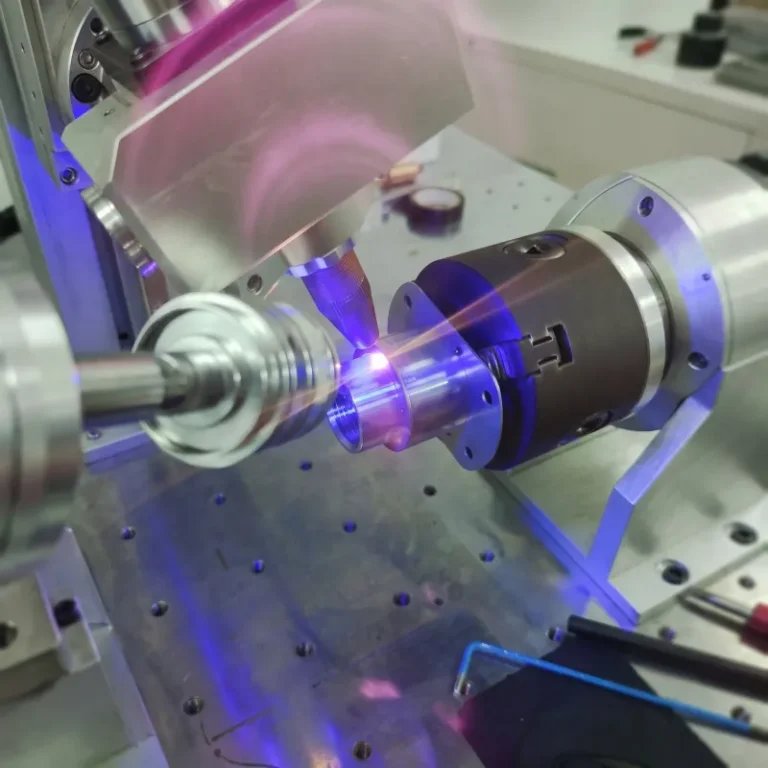
The pool is small and it freezes quickly, so gas has less time to get out. Contamination and fit-up therefore matter more with a fiber laser welder, not less — the same joint that tolerated a smear of oil under an arc will hold the resulting gas because the metal closed over it faster. What does improve is repeatability. Travel speed stops being a hand skill, which removes the most common source of pore-to-pore variation along a seam; that is most of the argument for robotic laser welding on parts that repeat.
Deep welds bring their own version. When a beam drives a keyhole through thick section, the keyhole can collapse and leave a void behind it — porosity that has nothing to do with cleanliness and everything to do with parameters. It is worth knowing that it exists before assuming a clean part means a clean weld.
If you have a joint that keeps failing inspection, a macro section tells us in one look which of the routes above you are dealing with. Send us a photograph of the section along with the alloy and the joint drawing. Send us a section
When the Fix Is Not at the Arc
Settings can only do so much. If the joint arrives with oxide, oil or moisture on it, the pores were decided before the arc was struck, and the answer is upstream — in the prep step, in how long parts sit between cleaning and welding, and in whether the cleaning happens next to the weld station or in another building.
That is the case on aluminum more than anywhere else, and it is covered end to end in cleaning aluminum before welding.
Common Questions
Is porosity always a reject?
No. Acceptance depends on the code the part is built to, the size and distribution of the pores, and whether the joint carries load or pressure. What is always true is that porosity found at inspection costs more than porosity prevented at the bench.
Can you weld over porosity?
Not usefully. Melting over a pore usually redistributes the gas rather than removing it. Gouging out the affected length and rewelding with the cause fixed is the route that holds.
Why does aluminum get porosity when the same setup is fine on steel?
Because the solubility collapses as the metal sets. What the molten pool took in has to go somewhere, and on aluminum it is still leaving as the bead sets. Steel tolerates the same contamination far better.
Does turning the gas flow up fix it?
Rarely, and it can make things worse. Too much flow makes the shroud turbulent and pulls air into it. Match flow to the cup size, then look at drafts, post-flow and the state of the nozzle before touching the regulator again.
Does laser welding eliminate porosity?
No. It removes some causes and sharpens others. The pool freezes faster, so contamination and joint gap matter more, and deep keyhole welds can trap voids of their own.
Related
Equipment
Further reading
Get in touch
- Send us a section with the alloy, the joint drawing and how many of these you run.