In short: Welding melts the edges of the parts themselves and fuses them into one piece, with or without added filler. Brazing never melts the parts; it heats them until a filler alloy with a lower melting point flows into a tight gap between them and bonds to both surfaces as it cools. The cut-off is usually given as 450 °C (840 °F): fillers that flow above it are brazing, those below it are soldering.
That single difference, whether the base metal melts, drives almost everything else, from how strong the joint is and how hot it can run in service to which metals you can put together at all.
How Each Process Joins Metal
Welding
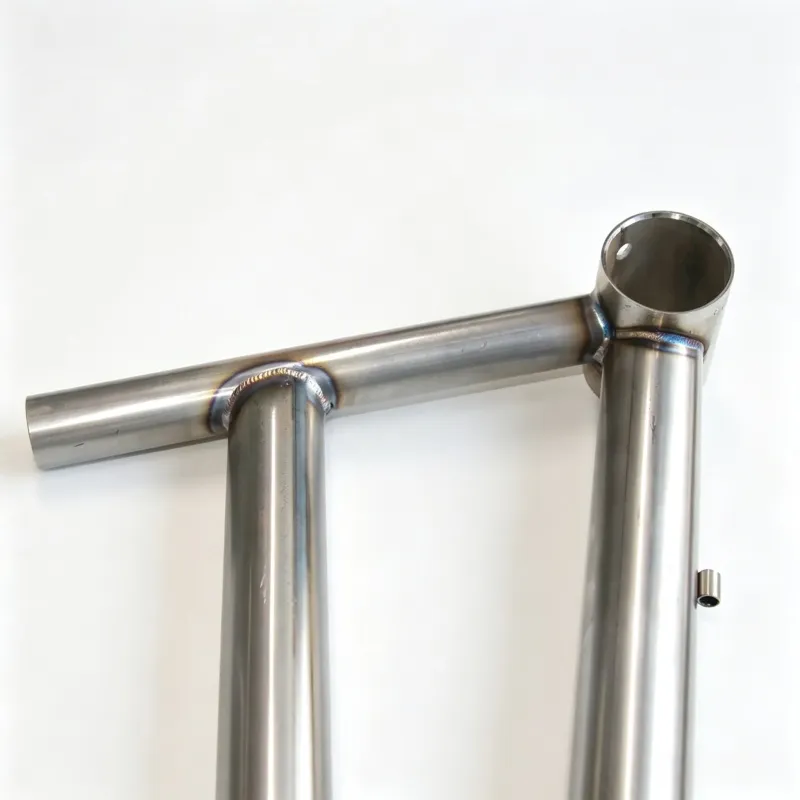
An arc, a flame or a laser beam melts a small pool at the joint line. The molten edges run together, filler wire is added if the gap or the profile needs it, and the pool freezes into a continuous piece of metal. Done right, the joint has the same chemistry as the parts and can carry their full load. Against that, the parts carry a heat-affected zone on either side and some distortion as the hot metal shrinks.
Brazing
The parts are cleaned, fluxed or placed in a protective atmosphere, and heated as a whole around the joint with a torch, an induction coil or a furnace. When they reach temperature, the filler is touched to the joint and capillary action pulls it into the gap. The fit matters: a gap of a few hundredths of a millimeter wicks well, while a loose fit leaves voids that no amount of extra filler will fill. Common fillers are silver alloys, copper-phosphorus for copper tube, aluminum-silicon for aluminum and nickel alloys for high-temperature parts.
Braze welding sits between the two and confuses people. A bronze filler is laid into a groove or fillet, much like a weld bead, but the steel underneath is never melted. It is common for repairing cast iron and for joining galvanized sheet, where silicon bronze wire runs cool enough to burn off much less zinc. Why the zinc matters is covered in our guide to welding galvanized steel.
Strength, Heat and Distortion
A well-designed brazed joint can be very strong, but it gets there through area rather than fusion. Brazed joints are usually laps or sleeves with plenty of overlap, so the thin filler layer works in shear across a wide surface. Put the same filler in a butt joint and it is the weak link.
Temperature in service is the other limit. A brazed joint depends on its filler, and that filler starts to soften long before the steel around it does. Exhaust parts, furnace fittings and anything else that runs hot belong to welding.
Distortion works the other way round from what many expect. Brazing runs at lower temperatures, but it heats a wide area evenly, and on a long assembly that can move things as much as a short weld would. Welding puts more heat into a smaller spot, and how much that spot spreads depends on the process: a TIG arc spreads it further than a laser beam does. How the TIG arc itself works is explained in our introduction to TIG welding.
Where Brazing Is the Better Choice
Dissimilar metals are the classic case. Copper to steel, brass to stainless and carbide tips onto steel tool bodies are joined every day by brazing, because the base metals never have to mix in a melt pool where they would form brittle compounds.
Copper tube in HVAC and refrigeration is the most familiar example. A copper-phosphorus filler flows into the fittings without flux, makes a joint that holds pressure, and a fitter can do it on site with a torch.
It also suits assemblies with many joints at once. A heat exchanger or a batch of small fittings can go through a brazing furnace together, and every joint comes out at the same time with very little clean-up.
Experienced brazers watch the far side of the joint rather than the side they feed. When a bright line of filler shows up there, the alloy has run all the way through the gap. If the flux turns black and the filler balls up instead of flowing, the joint was overheated or not clean, and adding more filler will not save it.
Where Welding Is the Better Choice
Welding is the default whenever the joint is in the same metal and has to carry structural load, run hot, or survive corrosion without a second alloy in the joint. A brazed joint puts a different metal between the parts, and in wet service that difference can start galvanic corrosion. Flux left in the joint does the same damage, so every brazed part has to be washed afterward, which a welded part does not need.
Welding is also faster per joint on long seams in sheet and plate, and it needs no close-fitting overlap, so parts can be designed as simple butts, corners and fillets.
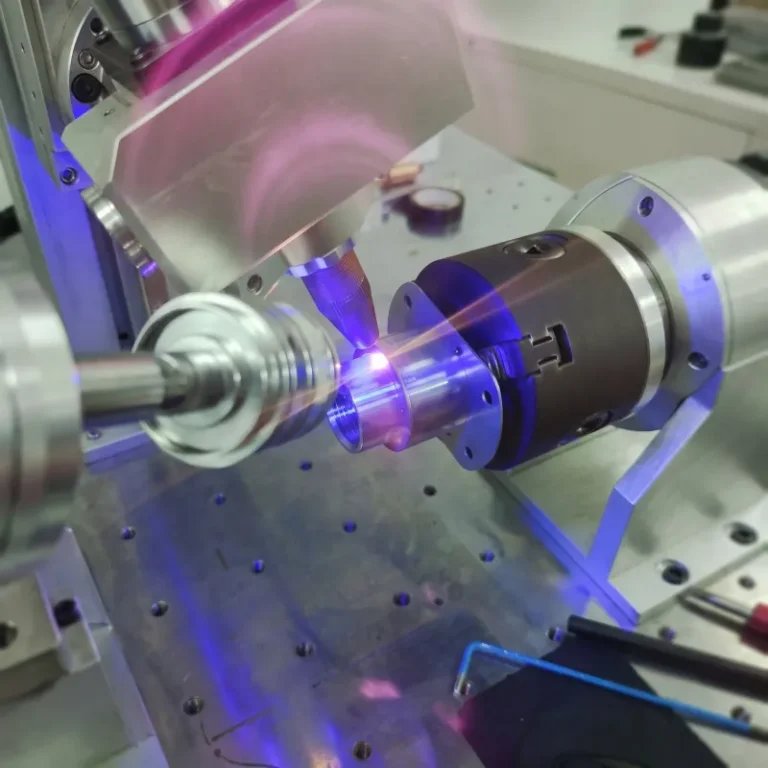
The old reason for brazing thin sheet was that an arc burned through it or pulled it out of shape. A handheld laser welder removes most of that problem by putting its heat into a narrow line. On our 2,000 W single-wire model, a red aiming light shows where the beam will land before you fire it, which matters on a narrow lap or edge joint where a few millimeters off the line means missing the seam entirely.
Heavier and longer work goes to the 3,000 W machine, which comes with a gun head rated for 4,000 W. For you, that means a head built to take more heat than the source puts out, so it stands up to high temperatures on long seams and is less prone to damage. Which metals our laser welding machines handle, from steel and stainless to aluminum and brass, is set out under welding by material.
If you braze today and want to know whether a welded joint would do the same job, send us the part drawing, both metals and how the part is loaded or heated in service. We will say whether laser welding fits or whether the joint should stay brazed. Tell us what you braze today
Common Questions
Is brazing stronger than welding?
A properly made weld is usually stronger, though a well-designed brazed lap joint can be stronger than the thinner part it joins.
What is the difference between brazing and soldering?
Both use a filler that melts below the base metal. Brazing fillers flow above about 450 °C (840 °F) and give much stronger joints; soldering fillers flow below that and are used mostly for electronics and light plumbing.
Can you braze aluminum?
Yes, with aluminum-silicon fillers and close temperature control, because the filler melts only a little below the aluminum itself. Furnace brazing is common for aluminum heat exchangers; torch brazing aluminum by hand takes practice.
Can you weld over a brazed joint?
Not directly. Grind out the braze filler and clean back to bare metal first, because copper or silver alloy left in a weld pool can crack the weld.
Can a laser weld replace a brazed joint?
Sometimes. A laser weld melts the base metal, so it can stand in for brazing on same-metal joints in steel, stainless or aluminum, but not where the brazing is there to join dissimilar metals or to keep heat away from the part.
Related
Equipment
Further reading
Get in touch
- Tell us what you braze today, the metals involved and how the part is loaded.