In short: Galvanized steel can be welded with MIG, stick, flux-cored and laser processes, but the zinc coating has to be dealt with first. Zinc turns to vapor long before steel melts, so it fumes, disturbs the pool and causes porosity unless it is removed from the joint or given a way out. Strip the zinc from the joint area, ventilate properly, weld, then restore the corrosion protection you removed.
Most of the trouble with galvanized work is not the steel. Under the zinc it is ordinary low-carbon steel that welds easily. The coating is what changes the job, and it changes both the weld and the air around the welder.
What the Zinc Does at the Arc
A galvanized coating is a layer of zinc and zinc-iron alloy bonded to the steel. Hot-dip galvanizing leaves a thick coating; electro-galvanized and galvannealed sheet carry much thinner ones. All of them behave the same way under an arc or a beam: the zinc melts, boils and leaves as vapor while the steel beneath is still heating up.
That vapor has to go somewhere. Some of it bubbles up through the pool and gets caught as the metal freezes, which is the main source of porosity on galvanized joints; the wider mechanism is covered in weld porosity. Some of it erupts at the surface and throws metal, and the reasons that shows up as spatter are explained in weld spatter. The rest oxidizes in the air as white zinc oxide fume, which settles as a fine white powder on the plate and the bench.
On a heavy hot-dip coating there is a further risk on some structural steels: molten zinc drawn into the hot metal along grain boundaries can start cracks. Removing the coating from the joint area avoids it.
Fumes Come First
Zinc oxide fume causes metal fume fever, a short illness with flu-like chills, aches and a metallic taste that often starts hours after the shift rather than during it. Welders sometimes put it down to a cold. Repeated exposure is not something to shrug off.
Grind or strip the coating before welding wherever you can, and use local fume extraction close to the arc rather than relying on a fan or an open door. In enclosed spaces or on long runs, a suitable respirator is part of the setup. Grinding also produces zinc-bearing dust, so the extraction and protection apply to the prep as well.
Preparing the Joint
Remove the zinc from the weld zone and a margin either side, on both faces where you can reach them. A grinding wheel or flap disc is the usual tool; on thin sheet, a lighter touch keeps the steel from heating and the edge from thinning. On parts that will be painted or recoated anyway, chemical stripping is also used.
Where stripping is not possible, joint design helps. Leave a root gap on butt joints so the vapor has an escape path, and avoid tight lap joints with zinc trapped between the sheets. If a lap joint cannot be avoided, a small standoff between the sheets lets the vapor out instead of through the weld.
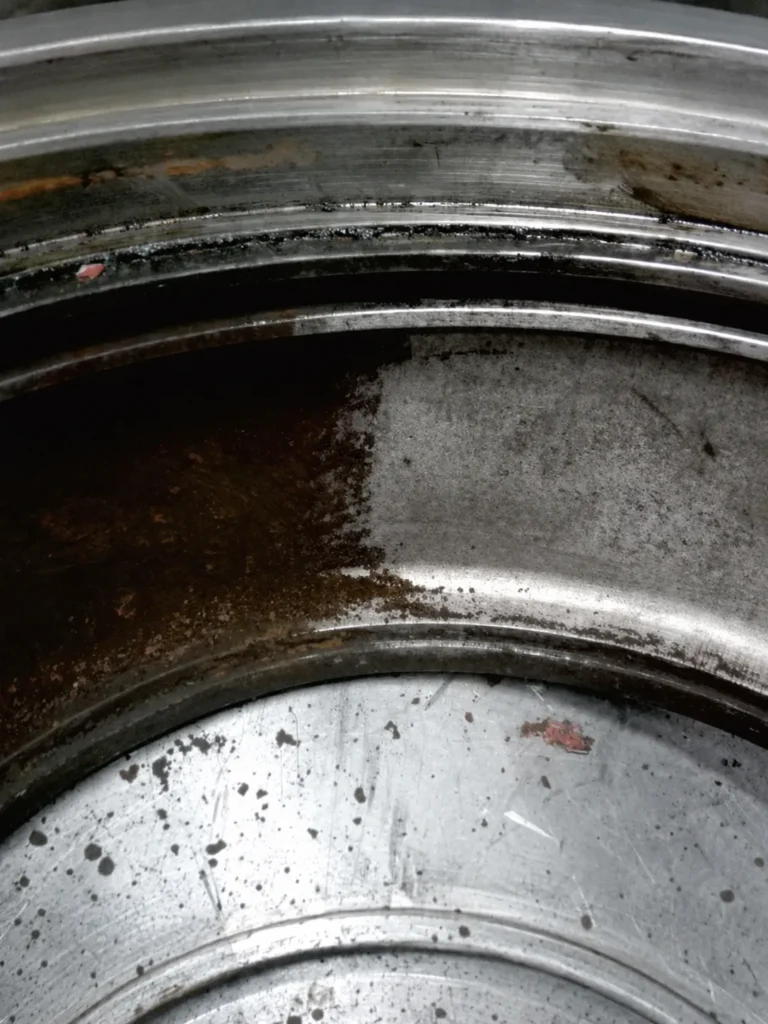
The tell that the coating has not been dealt with is easy to spot: the arc pops and wanders, a white haze rises off the joint, and the toes of the bead come out ragged with pinholes along them.
Choosing the Process and Settings
MIG works well on galvanized sheet with an argon-CO₂ mix. Slow the travel slightly compared with bare steel so the vapor has time to clear, and use a small side-to-side movement rather than a straight drag.
Stick welding with fast-freeze or fill-freeze electrodes is common on site, because the arc digs through residual coating and the slag shields the pool. Expect more cleanup.
Flux-core handles residual zinc better than solid wire but adds slag and fume.
TIG is the poorest fit. Zinc vapor contaminates the tungsten quickly, so the coating has to be completely removed first.
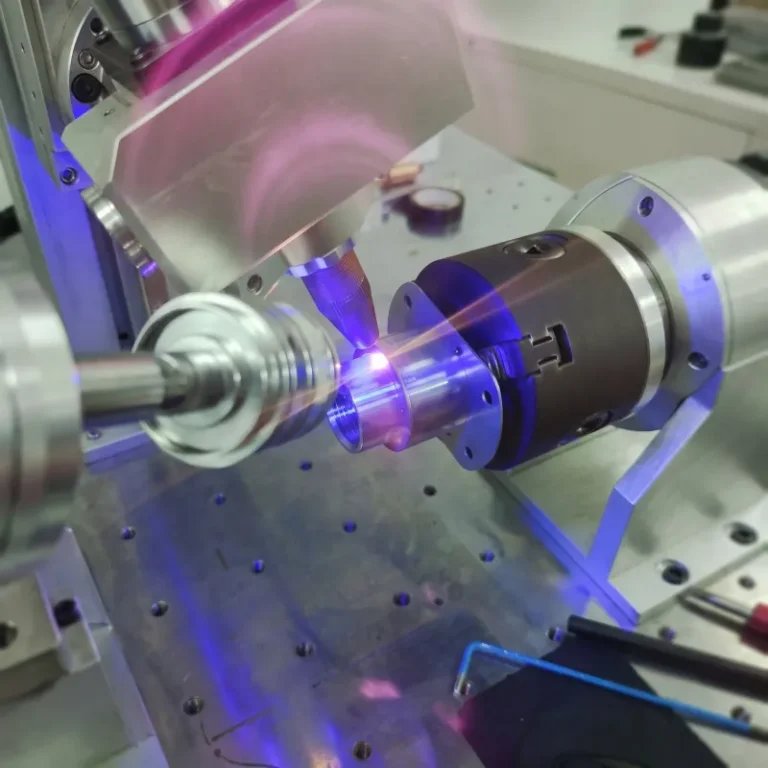
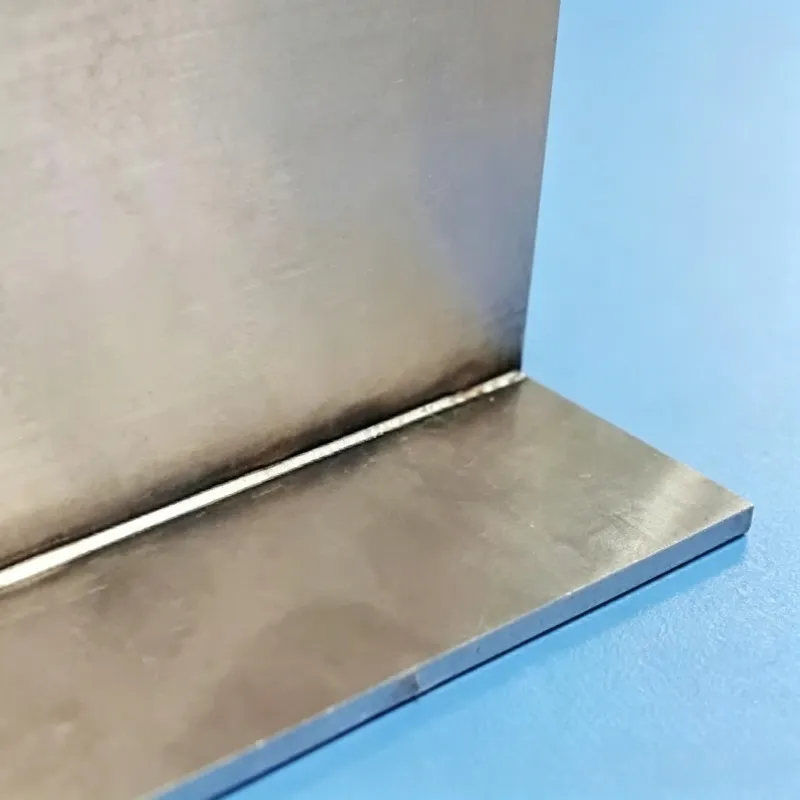
Laser welding puts much less heat into the part, which keeps the coating burn-back next to the seam narrow. Our handheld laser welders run in either continuous or pulse mode, and on coated sheet it pays to run a test coupon in each mode, because pulsed output can give the vapor short pauses to escape between pulses.
The water-cooled 1500 W configuration oscillates the beam across a width of up to 5 mm. A wider weave opens the pool so vapor can leave from the surface instead of being trapped under it, and it bridges small fit-up gaps without filler.
Galvanized sheet is one of the materials listed for our machines alongside stainless, carbon steel, aluminum and brass; how settings shift between them is set out under laser welding materials.
If you weld galvanized parts regularly and want to know how a laser would handle them, the coating type, the sheet thickness and the joint decide most of it. Tell us those, and we can suggest a test plan before any decision on equipment. Tell us about the coating
After the Weld: Restoring Protection
Welding burns the zinc off the joint and the band beside it, and that bare steel will rust like any other. Repair it once the weld is clean: zinc-rich paint is the common shop method, zinc spray (metallizing) gives a heavier coat, and zinc-based repair solders are another option. ASTM A780 describes accepted repair methods for damaged galvanized coatings.
When the design allows, a better order is to fabricate and weld bare steel, then hot-dip galvanize the finished assembly. If you do, remove all weld slag first; the acid pickling at the galvanizer does not dissolve it, and zinc will not bond where slag remains.
Common Questions
Is it safe to weld galvanized steel?
It is done every day, but only with the coating removed where possible and proper fume extraction, because zinc oxide fume causes metal fume fever.
Do you have to grind galvanized before welding?
Not always, but it gives a far cleaner weld and less fume. Welding through the coating is possible with slower travel and a gap for vapor, at the cost of more porosity and spatter.
What rod is best for welding galvanized steel?
Fast-freeze or fill-freeze electrodes are the usual choice for stick welding on galvanized work.
Can you laser weld galvanized steel?
Yes. The low heat input keeps the burned-back zone narrow; give lap joints a small gap, and run test coupons in continuous and pulse modes to find the setting with the least porosity.
How do you protect the weld afterward?
Clean the area, then apply zinc-rich paint or zinc spray over the weld and the bare band either side.
Related
Equipment
Further reading
- Weld Spatter: What Causes It and How to Keep It Down
- Weld Porosity: What Causes It and How to Stop It
Get in touch
- Tell us about the coating, the sheet thickness and the joint you need to weld.