In short: The arc in a plasma cutter runs at roughly 20,000 to 30,000 °C (about 36,000 to 54,000 °F) at its core, depending on the torch, the current and the gas. Steel melts at around 1,500 °C, so the arc has heat to spare. What decides the quality of the cut is how much of that heat ends up in the metal beside the cut.
That surplus is why the question matters to anyone choosing a cutting process. It explains the edge a plasma table leaves, the way thin sheet moves after cutting, and the point at which a fiber laser starts to make more sense.
Where the Heat Comes From
A plasma torch forces gas through a narrow nozzle and strikes an arc through it. The arc strips electrons from the gas and turns it into plasma, and squeezing that arc through the nozzle concentrates it far beyond the temperature of an ordinary welding arc. The same stream leaves the nozzle at high speed, so it does two jobs at once: it melts the metal and blows the melt out of the cut.
Compressed air is the common gas on shop and handheld systems. Oxygen, nitrogen and argon–hydrogen mixes are used on production tables for cleaner edges on particular metals. None of them changes the basic picture: a very hot, fairly wide column of energy moving along the plate.
What That Heat Does to the Part
The heat-affected zone
Next to every thermal cut sits a band of metal that never melted but got hot enough to change. With plasma that band is comparatively wide. On carbon steel the cut face usually comes out harder than the plate around it, and the trouble shows up later: a tap that snaps in a plasma-cut hole, or a crack that opens along the edge when the part goes onto a press brake. Many shops drill plasma-cut holes out to size before tapping for exactly this reason.
Welding is the other place it surfaces. Air-plasma edges on carbon steel can carry nitrogen into the joint, and the result looks like a gas problem at the torch when the cause is the cut face. If a weld along a plasma-cut edge keeps showing pores, grind the face back to bright metal on one test joint and compare; the pattern to look for is set out in weld porosity.
Kerf and bevel
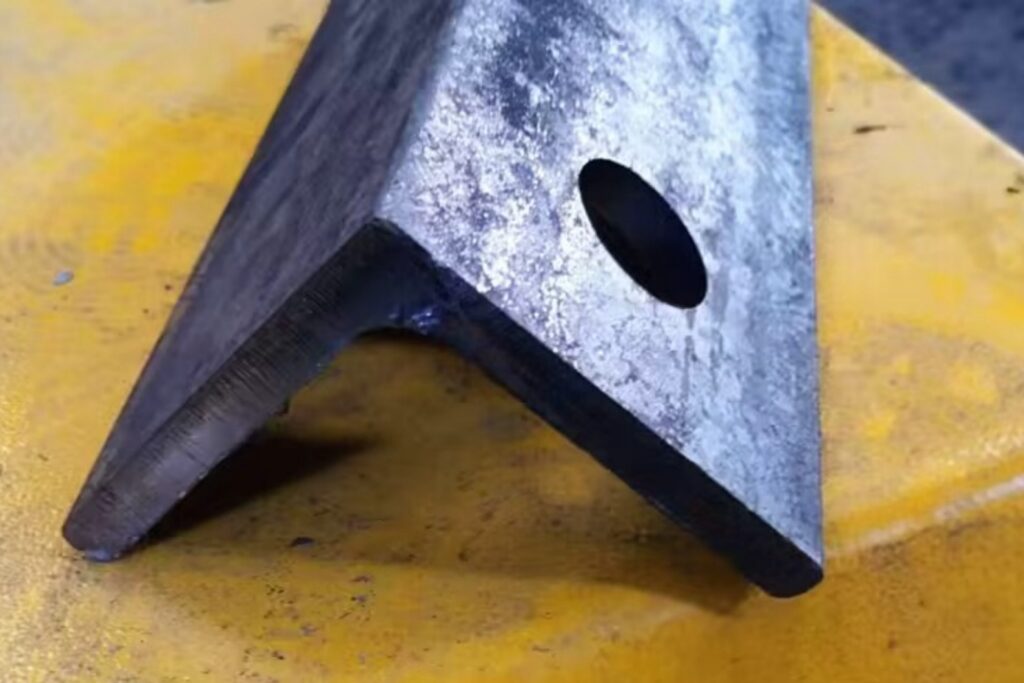
A wide column of heat cuts a wide slot. Plasma kerf is several times wider than a laser kerf at the same thickness, which costs material between nested parts and limits how small a hole or slot can be. The cut walls are rarely square, either. Plasma edges come off with a slight bevel, and because the gas swirls in the torch, one side of the cut is noticeably squarer than the other. Operators learn to run the torch direction so the good side lands on the part and the poor side on the scrap. How kerf is measured and why it matters for fit is covered in what kerf is in laser cutting.
Distortion and dross
Thin sheet is where the heat input hurts most. A long plasma cut in light-gauge steel can bow the sheet before the cut is finished, and a part that came off the table flat may not stay flat once it cools. On thicker plate the cost moves to the bottom edge, where resolidified dross has to be chipped or ground off before the part goes anywhere else.
How a Fiber Laser Handles the Same Job
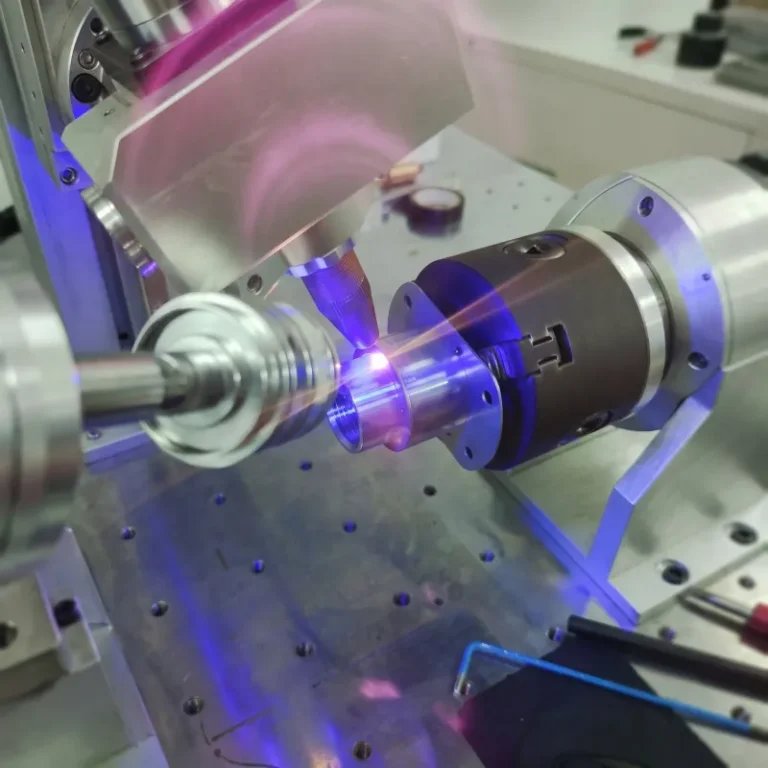
A laser beam has no flame temperature in the way an arc does. It is light, and it turns into heat only where the metal absorbs it, in a spot a fraction of a millimeter across. Because the energy is that concentrated, the metal melts through faster and the surrounding plate has less time to heat up. The heat-affected band is narrower, the kerf is narrower, the cut walls are close to square, and thin sheet stays flatter.
Narrow kerf and square walls only pay off if the machine puts the cut where the drawing says. On the 4020 and 1390 frames in our sheet metal laser cutting range, positioning accuracy is ±0.03 mm per meter and repeatability is ±0.02 mm per meter. That is what lets bolt holes in two separately cut plates line up across a weldment without reaming, which is the step plasma-cut parts most often need before assembly.
None of this is free. A fiber machine costs more to buy than a plasma table of similar bed size, and it asks for cleaner material handling and a stable power supply. The question is whether the parts recover that difference.
When a Fiber Laser Is the Better Fit
Laser pulls ahead when the part, not the plate, is what you are paying for. Sheet and plate in the thin to mid range, parts with small holes, tabs and slots, stainless or aluminum with a visible edge, and anything that goes straight to bending, welding or powder coating without a grinding step. High-mix nesting favors it too, because narrow kerf lets parts sit closer together.
Thickness is where the line moves with power. A 6 kW fiber cutter is rated for 27 mm carbon steel and 18 mm stainless. At 30 kW the ratings reach 55 mm and 45 mm, which takes laser into plate that used to belong to plasma by default; the carbon steel side is laid out under carbon steel laser cutting. Those are maximum single-pass figures, and day-to-day production usually runs below them.
Plasma still earns its place on very thick plate beyond the laser power you can justify, on structural work where every edge gets ground for weld prep anyway, on site cutting with a portable torch, and wherever the budget for the cutting cell is the deciding number. A side-by-side summary sits in laser cutting vs plasma cutting.
The clearest way to settle it is to put your own parts through both. Send a drawing or two with the material, the thickness range you cut most and what happens to the parts after cutting, and we will show you where laser changes the downstream work and where it does not. Send us the cut list
Common Questions
Is plasma hotter than a laser?
The arc is, but the comparison misleads. A laser beam has no flame temperature; it delivers its energy into a much smaller spot, so the metal melts through faster and less heat spreads into the plate around the cut.
Does plasma cutting harden steel?
On carbon steel the cut face usually comes out harder than the base metal, which is why plasma-cut holes are often drilled out before tapping.
Should a plasma-cut edge be ground before welding?
On joints that matter, yes. Grind the cut face back to bright metal, weld one ground and one unground test joint with the same settings, and section both. If the unground joint shows pores or poor fusion, make grinding part of the routine.
Can plasma cut stainless steel and aluminum?
Yes, plasma cuts any conductive metal. The edges come out darker and rougher than a nitrogen-assisted laser cut, which matters most where the edge stays visible.
At what thickness does plasma make more sense than laser?
Where the plate is thicker than the laser power you can justify is rated for, or where the edge will be ground for weld prep regardless of how it was cut.
Related
Equipment
Further reading
Get in touch
- Send us the cut list, along with the material, the thickness range and what the parts go through after cutting.