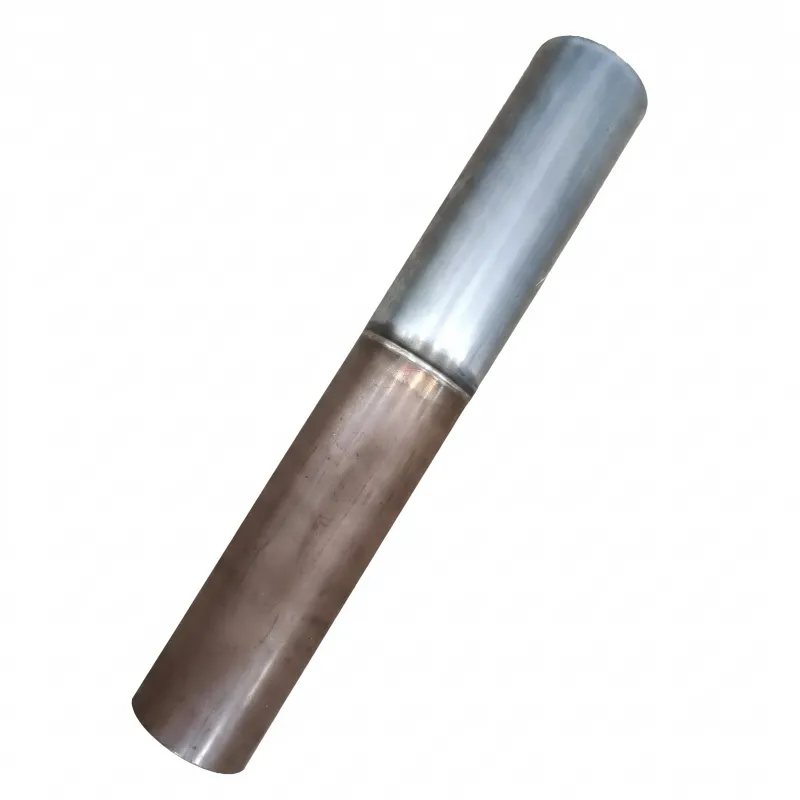
In short: Yes, stainless steel can be welded to mild steel, and fabricators do it every day on brackets, frames, food machinery and exhaust parts. The usual route is TIG or MIG with a 309L filler, which carries extra chromium and nickel so the weld still ends up sound after it mixes with the mild steel. Keep the heat input modest, keep the joint clean and remember that the mild steel side will rust as readily as any other mild steel unless it is painted.
The joint is a mix of two metals, and most problems come from forgetting that. Pick the wrong wire, pour in too much heat or skip the cleanup, and you get a weld that cracks, a seam that rusts or a part that has pulled out of shape.
Why This Joint Behaves Differently
When the arc or beam melts both edges, the pool becomes a blend of stainless and mild steel. That mixing, called dilution, waters down the chromium and nickel that make stainless what it is. If too much mild steel ends up in the pool while the filler cannot make up for it, the weld can solidify into a hard, brittle structure that cracks either straight away or later in service.
The two metals also handle heat differently. Austenitic stainless expands more than mild steel as it heats and conducts heat away more slowly, so the stainless edge runs hotter, grows more and shrinks more as it cools. On a long seam that difference turns into bowing and pulled tacks.
Then there is corrosion. In wet or salty service, two different metals touching each other set up a small galvanic cell, and the mild steel next to the weld is the side that gives way first.
Choosing the Filler
For the common case of 304 or 316 stainless joined to mild steel, 309L is the standard choice. It is over-alloyed on purpose: even after a fair share of mild steel melts into it, the weld metal keeps enough chromium and nickel to stay tough and resist cracking.
The classic mistake is reaching for whatever wire is already on the machine. A 308L wire, fine on stainless alone, can end up under-alloyed once the mild steel dilutes it. A mild steel wire leaves a weld that rusts and can crack where it meets the stainless. When a joint will run hot for long periods, such as on furnace parts or exhaust manifolds, many shops move to a nickel-based filler instead, because carbon can slowly migrate across a steel-based weld at high temperature.
Stick welders have the same choice in rod form, with 309L electrodes doing the same job as the wire.
Controlling Heat and Dilution
Lower heat input means less of either base metal melts into the pool, which keeps the filler in charge of the weld chemistry. Narrow beads, stringer passes rather than wide weaves, and a steady travel speed all help.
Cleanliness matters more than usual. Grind mill scale off the mild steel well back from the joint, wipe both sides with solvent, and keep separate grinding discs and wire brushes for the stainless. A disc already used on carbon steel drops iron particles on stainless that turn into rust spots within days, and on a mixed joint that contamination is easy to miss because the rust looks as if it came from the mild steel next door.
Fit-up and tacking deal with the expansion mismatch. Tack more closely than you would on a single metal, weld in short sections from the middle out, and clamp the part until it has cooled.
Laser Welding Stainless to Mild Steel
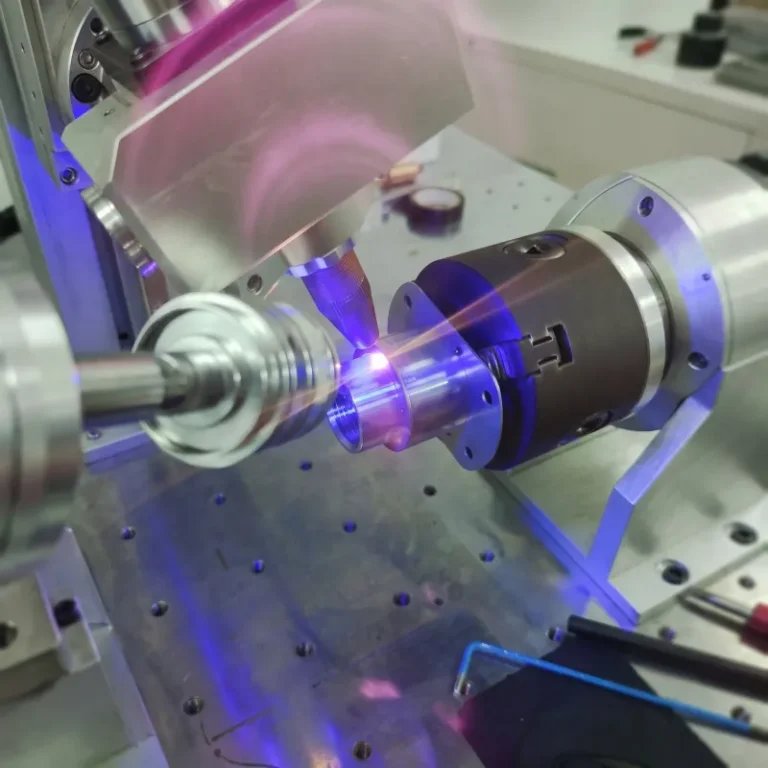
A laser puts its heat into a very narrow line, so the melted zone and the area around it stay small, and the part comes off with less distortion to fight. That is a real advantage on a seam where the two halves want to move by different amounts.
On thin sheet where the joint will be painted and corrosion at the seam is not the main concern, a tight butt or lap joint can often be fused without filler. For thicker work, or wherever the weld itself has to hold up, adding a 309L wire gives you the same chemistry control as TIG or MIG.
Our automatic laser welding platform is specified for joining dissimilar materials, so stainless-to-mild-steel parts sit within the work it was built for. For you, the payoff is a repeatable bead with the heat input set once and held, which is exactly what keeps dilution steady from part to part.
When the joint needs filler, our collaborative robot laser welding cell feeds wire from 0.8 to 1.6 mm. That range covers the sizes 309L is commonly sold in for thin and medium work, so you are not locked into a special wire to weld the two metals together.
For the stainless side on its own, our page on stainless steel laser welding sets out penetration by power. Send us both grades, the thickness of each and a drawing of the joint, and we will advise whether a fused seam will do or the part needs filler. Send us both grades
After the Weld
Clean the stainless side back to bright metal; pickling paste or a passivating treatment brings back its corrosion resistance where heat has tinted it. Prime and paint the mild steel side, and carry the paint a short way over the weld itself. If the part will sit in water or salt spray, an insulating coating across the joint helps stop the mild steel from corroding faster than it otherwise would.
Common Questions
Can you weld stainless steel to mild steel?
Yes, with the right filler and a clean, well-fitted joint it is routine work.
What filler rod do you use to weld stainless to mild steel?
309L is the usual choice for 304 or 316 to mild steel. For parts that run very hot for long periods, a nickel-based filler is often specified instead.
Can you MIG weld stainless to mild steel?
Yes. Run a 309L wire with a shielding gas suited to stainless, keep the heat moderate and avoid wide weaves that pull in extra mild steel.
Will the weld between stainless and mild steel rust?
The weld made with 309L resists rust well, but the mild steel beside it will rust like any bare mild steel. Paint the mild steel side and take the coating a little way over the weld.
Can you weld stainless to mild steel without filler?
On thin sheet with a tight joint, a laser or TIG can fuse it without filler, which is fine for many painted parts. Where the joint must resist corrosion or take heavy load, add 309L so the weld chemistry stays under control.
Related
Equipment
Further reading
- Welding Galvanized Steel: Zinc, Fumes and How to Get a Sound Weld
- Brazing vs Welding: How the Joints Differ and When to Use Each
Get in touch
- Send us both grades, the thickness of each and a drawing of the joint.