In short: The difference between MIG and TIG welding is what carries the filler. MIG feeds a consumable wire continuously through the torch, so the arc and the filler are the same thing and the process runs fast. TIG strikes its arc from a non-consumable tungsten electrode and the filler rod goes in by hand, which makes it slower and harder to learn but gives you far more control over heat and bead shape.
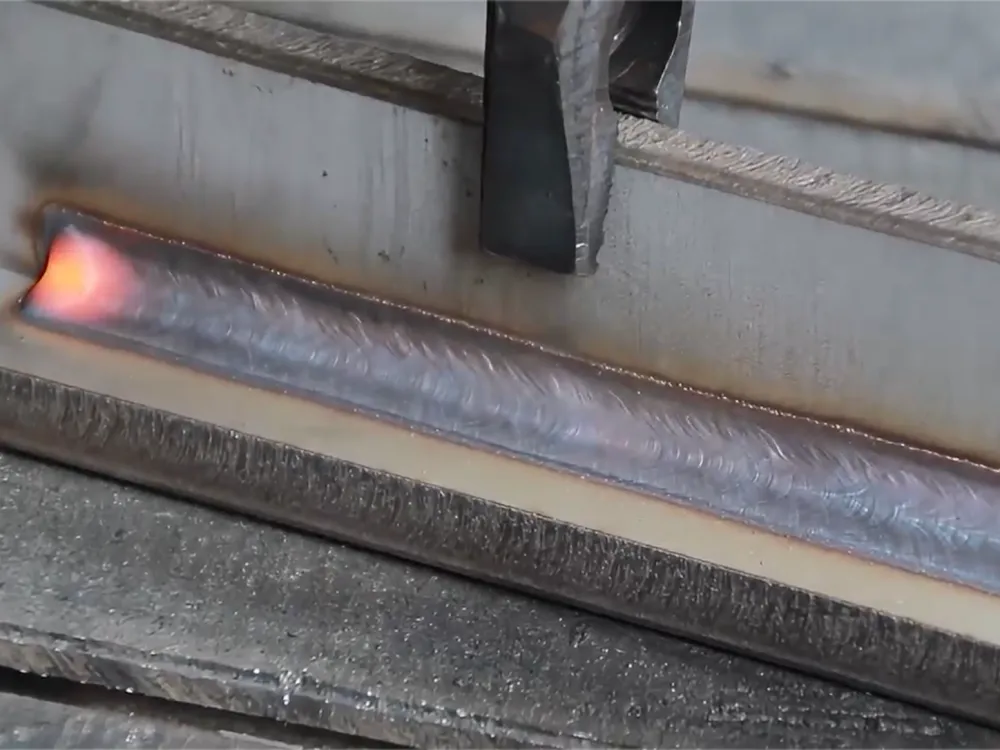
How Each Process Works
MIG
A wire feeder pushes filler wire through the torch at a set speed. The wire melts into the joint as the arc burns, shielding gas flows around it, and the operator’s main job is holding travel speed and gun angle steady. Because the filler arrives on its own, deposition is quick and a new welder can lay usable beads within days.
TIG
The tungsten electrode creates the arc and is not consumed. Filler, if the joint needs any, is dipped into the pool by the welder’s other hand while a foot pedal or a torch dial trims the current. Both hands and one foot are working at once. That is why TIG produces the cleanest beads, and why it takes the longest to learn.
Where They Actually Differ
| MIG | TIG | |
|---|---|---|
| Filler | Consumable wire, fed automatically | Separate rod, added by hand (or none) |
| Speed | Fast, high deposition | Slow, low deposition |
| Skill floor | Low | High |
| Heat input | Higher, more distortion on thin work | Controllable, less distortion |
| Typical thickness | Medium to thick sections | Thin sheet and precision work |
| Bead appearance | Acceptable, usually needs cleanup | Clean, often needs none |
| Spatter | Yes | Essentially none |
| Materials | Steel, stainless, aluminum with the right wire and gas | Steel, stainless, aluminum, copper, titanium |
| Shielding gas | Argon–CO₂ mixes for steel, argon for aluminum | Argon or argon–helium |
What Goes Wrong with Each
MIG
Most MIG faults are feed or gas, not settings. Listen to the arc: a steady one has an even crackle, and when it turns into an uneven hiss and stutter the contact tip or the liner is the usual cause. Travel too fast on thick steel and the bead sits on the surface without fusing into the sidewalls, which is lack of fusion and does not show from the outside. Any draft across the joint pulls the shielding gas off the pool and leaves porosity, which is why MIG outdoors needs a screen.
TIG
TIG faults are the electrode or the pool. Touch the tungsten into the weld and it is contaminated: the arc goes unstable, and the tip has to come out and be reground before you carry on. You can also read the gas coverage off the finished bead. Straw color is fine; gray means the post-flow stopped too early, and black means it stopped much too early. On aluminum, oxide or oil left on the surface turns into porosity no matter how well you run the arc, so cleaning is part of the process rather than preparation for it.
Which to Use, and When
Production work and heavier sections
MIG. Volume matters, the sections are medium or thick, the joint gets ground or painted afterward, and the people running it are not full-time welders. Structural fabrication, frames, brackets and general steel work sit here.
Thin, visible and critical work
TIG. The part is thin, the material is reactive or exotic, the weld will be looked at, or there is no room for distortion. Food and pharmaceutical stainless, thin aluminum, tube-to-tube joints and repair work sit here.
Where Laser Welding Sits
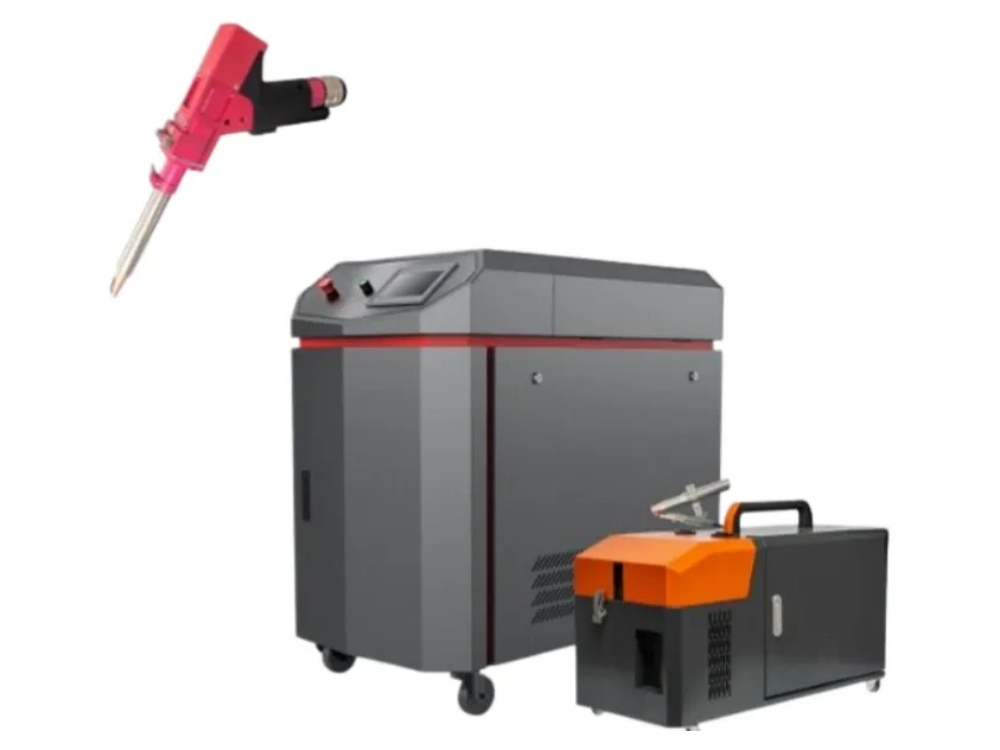
Both arc processes trade speed against control. Laser welding changes that trade because the energy is concentrated: a narrow heat-affected zone, little distortion on thin material, and high travel speed, which is the combination arc welding cannot give you at once. The full side-by-side, including where arc still wins, is set out in laser welding vs TIG and MIG.
What a shop actually buys is usually a handheld laser welder, and the first thing to check is not the laser at all. Both air-cooled and water-cooled units run on 220 V single phase, with one exception: the 3000 W machine needs 380 V three-phase. If your plant cannot give it that, the decision is made before you compare anything else.
After supply, the real change from an arc setup is that the skill moves into the settings. The controller holds up to 30 stored process parameter sets, so a joint you have already solved comes back as a recall rather than as technique. Wobble width is adjustable, with the maximum depending on the model, and shielding is nitrogen, argon or compressed air according to the material. The gun weighs about 0.5 kg on a 10 m fiber, so you wheel the machine to the work instead of carrying the work to a booth. The training figure quoted for these machines is about half an hour on the touchscreen, which is believable for someone who already reads a joint, and nothing like the months TIG takes to become competent.
Treat published thickness figures carefully. The air-cooled and water-cooled lines quote them differently, one as maximum single-pass thickness and the other as recommended workpiece thickness, so the two tables are not comparable and the figure for your job is confirmed per order against your material and joint. Machines are CE marked, with FDA and SGS documentation available on request.
If you are costing a laser setup against an arc one, the number that decides it is your own: how many of the same joint you make in a shift. Send a photo of the joint with the material and thickness, say what the volume looks like, and we will work the comparison through with you. Get in touch
Common Questions
Is TIG stronger than MIG?
Neither is inherently stronger. Strength comes from joint preparation, penetration and filler that matches the parent metal. TIG is more consistent on thin and critical work, which is why it gets specified where welds are audited.
Which is better for aluminum?
Both are used. MIG with a spool or push-pull gun is faster on thicker aluminum, and TIG is preferred on thin sheet and anywhere appearance matters. The surface has to be clean either way, since oxide and hydrocarbons cause most aluminum weld porosity.
Can one machine do both MIG and TIG?
Yes. Multi-process arc machines cover both plus stick, and they suit job shops with mixed work.
Does laser welding replace MIG and TIG?
No. Laser suits thin to medium sections, repeat work, and joints where distortion or finish is the constraint. Heavy structural work with poor fit-up is still arc territory.
Related
Equipment
Further reading
Get in touch
- Contact Topstar for advice on which process suits your joints and volumes.