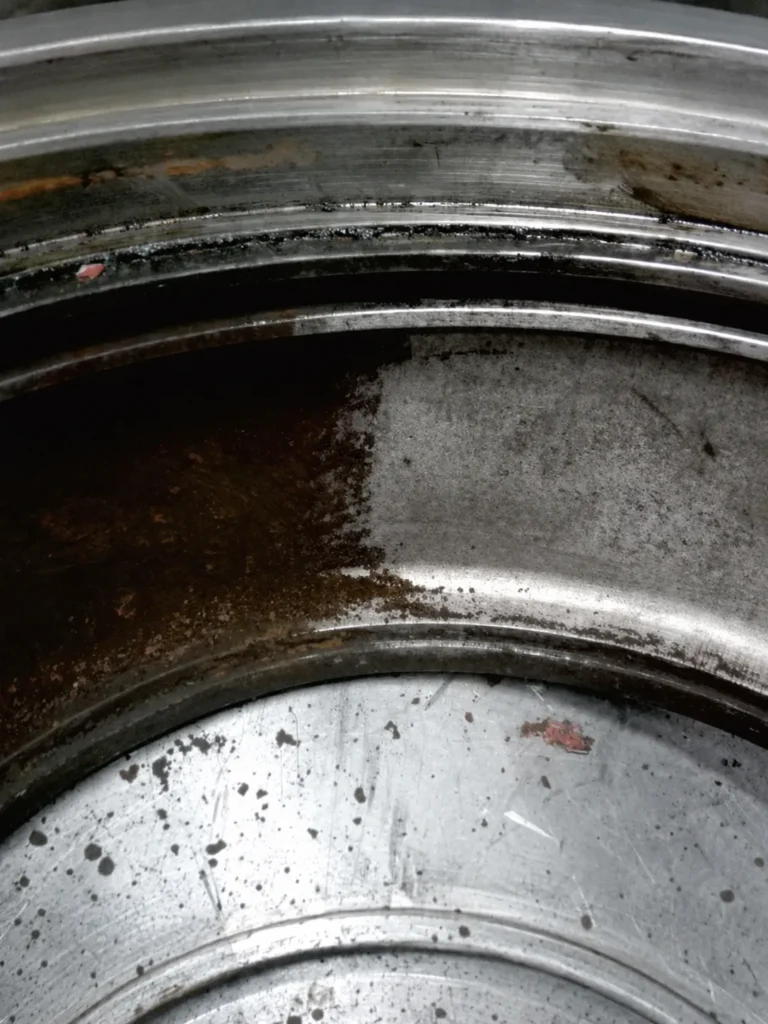
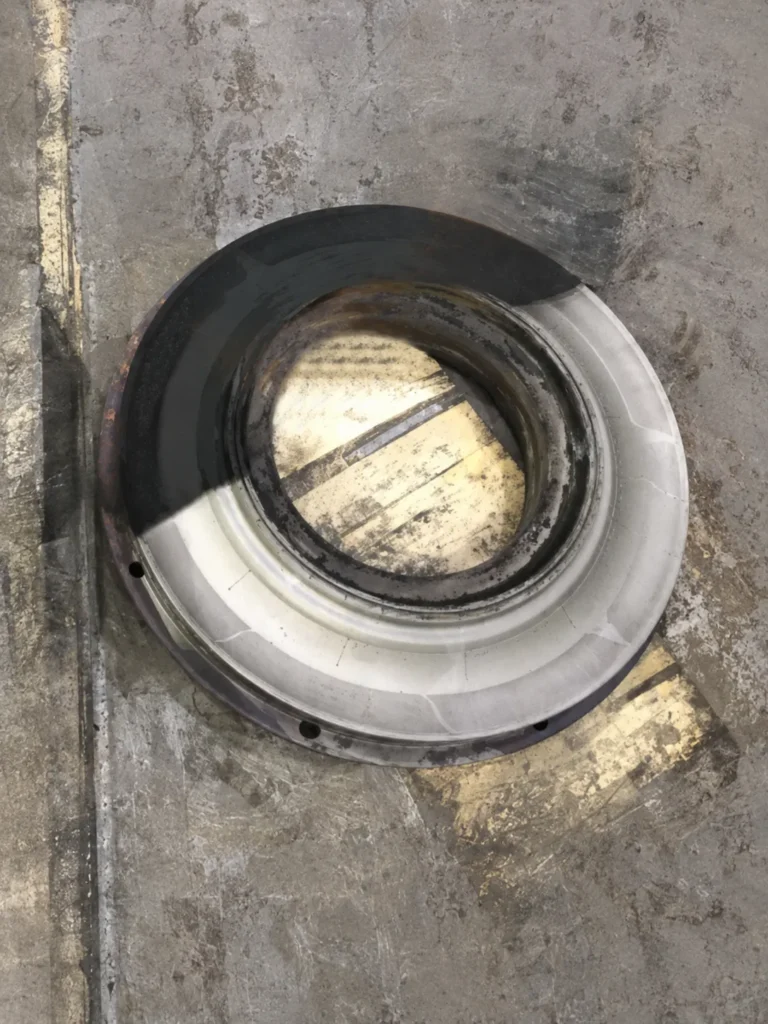
In short: Mill scale is the blue-black oxide skin left on steel by hot rolling, and it has to come off before most painting, coating and critical welding. Abrasive blasting and acid pickling remove it fully and are the industrial standards; grinding and flap discs handle small areas; laser cleaning strips it without grit or chemicals and suits weld zones, local prep and parts that cannot go to a blast room. Wire brushing alone usually just polishes it.
The reason to bother is that intact scale looks like protection and is not. It is brittle, it cracks as the steel flexes or heats, and paint applied over it comes away with the scale when it lets go.
What Mill Scale Is and Why It Has to Go
Hot-rolled steel leaves the mill at a temperature where the surface oxidizes almost instantly. The result is a thin, layered crust of iron oxides, tightly bonded in places and loose in others. Cold-rolled steel does not carry it, and hot-rolled steel bought as pickled and oiled has already had it removed at the mill, which is often the cheapest answer for sheet and light plate.
Scale is more noble than the steel under it, so wherever the crust cracks, the bare steel at the crack corrodes faster than it would on its own. Coatings bond to the scale rather than to the steel, so adhesion is only as good as the scale. And in welding, scale left in the joint feeds oxide and gas into the pool, which is one of the routes to weld porosity.
How the Common Methods Compare
| Method | Removes tight scale | Surface it leaves | What to watch |
|---|---|---|---|
| Abrasive blasting | Yes | Bare metal with an anchor profile | Grit containment, dust, cleanup |
| Acid pickling | Yes | Bare, smooth metal | Acid handling, rinsing, waste, flash rust |
| Grinding or flap disc | Yes, slowly | Bare metal with grind marks | Labor, heat on thin sheet, uneven finish |
| Wire brush or wheel | Loose scale only | Polished scale that looks clean | False confidence before painting |
| Laser cleaning | Yes | Bare metal, no media residue | Fume extraction, area rate on large plate |
| Weathering outdoors | Eventually | Rusted, uneven surface | Time, then blasting anyway |
Abrasive blasting is the default for structural steel and large plate. It takes scale off completely and leaves a profile that coatings grip well. The cost is the blast room or the containment around it, the spent media, and the cleanup. How blasting deals with rust under the scale is covered in whether sandblasting removes rust.
Pickling dissolves the scale in hydrochloric or sulfuric acid. It is how pickled sheet is produced, and it reaches every surface of a part at once. Outside a dedicated line it means acid handling, neutralizing and disposing of waste, and the bare steel starts to flash rust as soon as it dries. High-strength steels also carry a risk of hydrogen embrittlement. A vinegar soak is the small-shop version: it works on small parts, slowly.
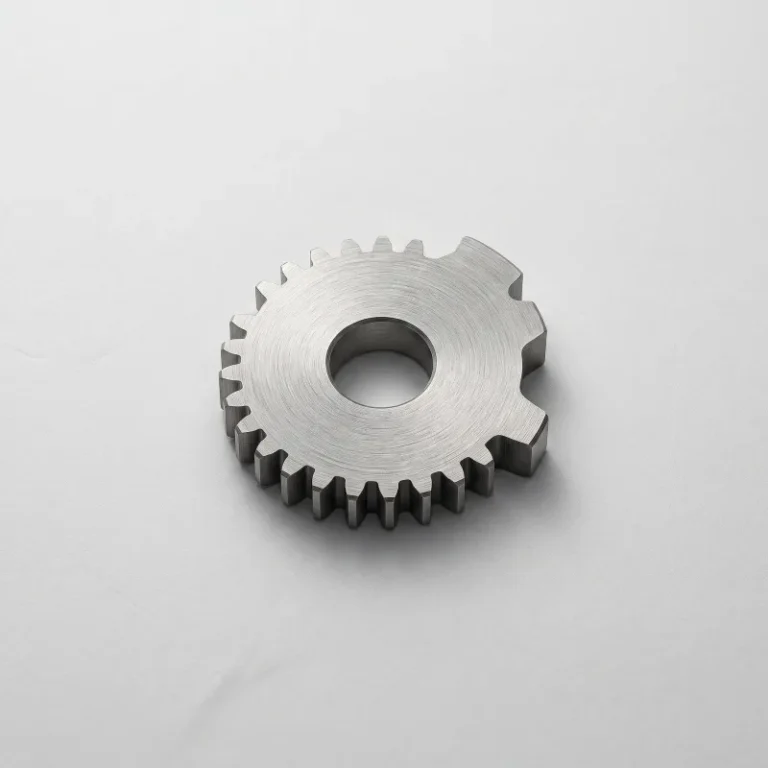
Grinding with a flap disc or grinding wheel removes scale where it sits, which makes it the usual choice around a weld joint. On large areas it is slow and tiring, and on thin sheet the heat can distort the part.
Wire brushing catches out more painters than any other method. A wheel takes off the loose flakes and burnishes what is left to a dark, even shine that looks like clean steel. It is not, and paint over it fails the same way it would over unbrushed scale.
Laser Cleaning on Mill Scale
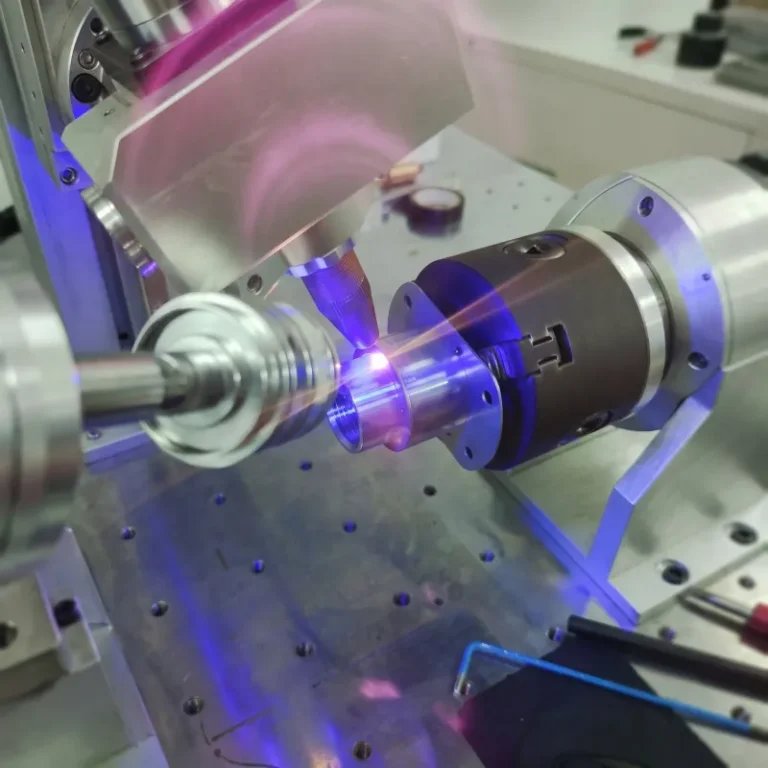
A laser removes scale by heating the oxide faster than the steel beneath it. The dark scale absorbs the beam strongly, breaks up and leaves the surface, and the process slows down once it reaches bare metal because bright steel reflects much more of the beam. No grit, no acid and no water touch the part, so there is nothing to clean up afterward except the fume, which needs extraction.
Thick, tightly bonded scale usually takes more than one pass, and the first pass often leaves a gray, patchy surface that the second pass clears. Thin sheet needs care, because a high-power continuous beam held too long in one spot can heat-tint or warp it. Lower-power pulsed units are the gentler choice for thin parts and finished surfaces; high-power continuous units are what make sense for plate. Which surfaces suit which approach is set out under steel and metal laser cleaning.
Before choosing a continuous machine for this work, check the power supply. On our continuous laser cleaning machines, the 3000 W portable configuration runs on 380 V three-phase power, so a site with only single-phase outlets will need that arranged first.
The handheld gun on that configuration spreads the beam into a line adjustable up to 300 mm wide. That lets the operator open the line wide for broad plate and close it down for a weld bevel or the inside of a flange.
The gun also carries a duckbill-style air curtain across its optical window. Scale breaks up into hot flakes and dust, and that stream of air keeps them from settling on the window and cutting the power that reaches the part.
If you are deciding between blasting, pickling and laser for a particular job, the part size, the thickness and the next step for the steel settle most of the choice. Share a picture of the scale along with those details, and the reply will suggest a starting method and what to test first. Send us a photo of the steel
Checking That the Scale Is Really Gone
A clean-looking surface is not proof, and the simplest check costs almost nothing: a copper sulfate drop test. A few drops of copper sulfate solution on bare steel plate out a copper-colored spot within seconds, while scale stays dark. It shows patches of remaining scale that the eye misses, especially after wire brushing.
Timing matters as much as the check. Bare steel from any method begins to flash rust, quickly in humid air, so plan the next step, primer or welding, to follow soon after cleaning rather than the next day.
Common Questions
Do you have to remove mill scale before painting?
For any coating expected to last outdoors or in service, yes, because the paint can only hold as well as the scale under it.
Do you need to remove mill scale before welding?
For structural and pressure work, remove it from the joint and the area next to it. Light, tight scale is sometimes welded over on noncritical work, but it adds oxide and gas to the pool and makes porosity and inclusions more likely.
Will vinegar remove mill scale?
Yes, on small parts given enough time; rinse, neutralize and dry them afterward, then prime before flash rust sets in.
Is laser cleaning faster than sandblasting for mill scale?
On large open plate, blasting usually covers area faster. Laser cleaning gains where setup, containment and cleanup dominate, such as weld zones, local repairs and parts that cannot be moved to a blast room.
Can I buy steel without mill scale?
Yes. Order cold-rolled steel or hot-rolled pickled and oiled, which has had the scale removed at the mill.
Related
Equipment
- Continuous Laser Cleaning Machines
- Pulsed Laser Cleaning Machines
- Laser Cleaning for Metal and Steel
Further reading
Get in touch
- Send us a photo of the steel, with the part size, thickness and what goes on it next.