In short: Bevel cutting is cutting the edge of a plate, tube or pipe at an angle instead of square, almost always so the edge can be welded. The angled face opens a groove between two parts, which lets the weld reach the root of a thick joint instead of sitting on the surface. Bevels are cut with oxy-fuel, plasma, laser or waterjet heads that tilt, or machined on beveling machines and mills.
A square butt joint works on thin material because the arc or beam can fuse the full thickness from one side. Past a certain wall, it cannot, and a weld laid over a square edge leaves an unfused band in the middle of the joint that no inspection of the cap will reveal. The bevel is there to give the welder access.
Bevel, Chamfer and the Common Joint Shapes
People use bevel and chamfer loosely. On the shop floor a chamfer is usually a small angled edge that breaks a sharp corner or helps a part slide into a bore, while a bevel is a cut that runs most or all of the way through the thickness and exists for welding.
Weld-prep bevels come in a handful of shapes:
- Straight bevel (V-groove when two meet): one angled face, no flat at the root. Easy to cut, but the sharp edge burns through easily on the root pass.
- Bevel with land (Y-type): an angled face plus a short square section at the root, called the land or root face. The land gives the root pass something to hold on to.
- Double bevel (X or K): angled from both sides, used on thick sections that can be welded from both faces to cut down filler and balance distortion.
- J-groove: a curved root profile that needs less filler on very thick walls. It is normally machined rather than thermally cut.
On pipe in North America, the familiar end prep is a 37.5-degree bevel with a small land, set out in ASME B16.25. Structural and pressure codes publish their own prequalified joint details, and the welding procedure, not the cutting machine, is what decides the angle and the land for a given job.
How Bevels Are Cut
Oxy-fuel is the traditional method for heavy carbon steel plate. A torch on a track or a CNC table tilts to the bevel angle and burns through. It handles great thickness cheaply but is slow, works only on steel that oxidizes freely, and leaves a scaled face that is usually ground before welding.
Plasma bevel heads tilt the torch under CNC control and cut much faster than oxy-fuel on medium plate. The cut face carries some natural angle of its own, so bevel heads compensate for it, and the dross and nitrided layer on the face may need cleaning. How a plasma arc behaves at the cut is covered in how hot plasma cutting gets.
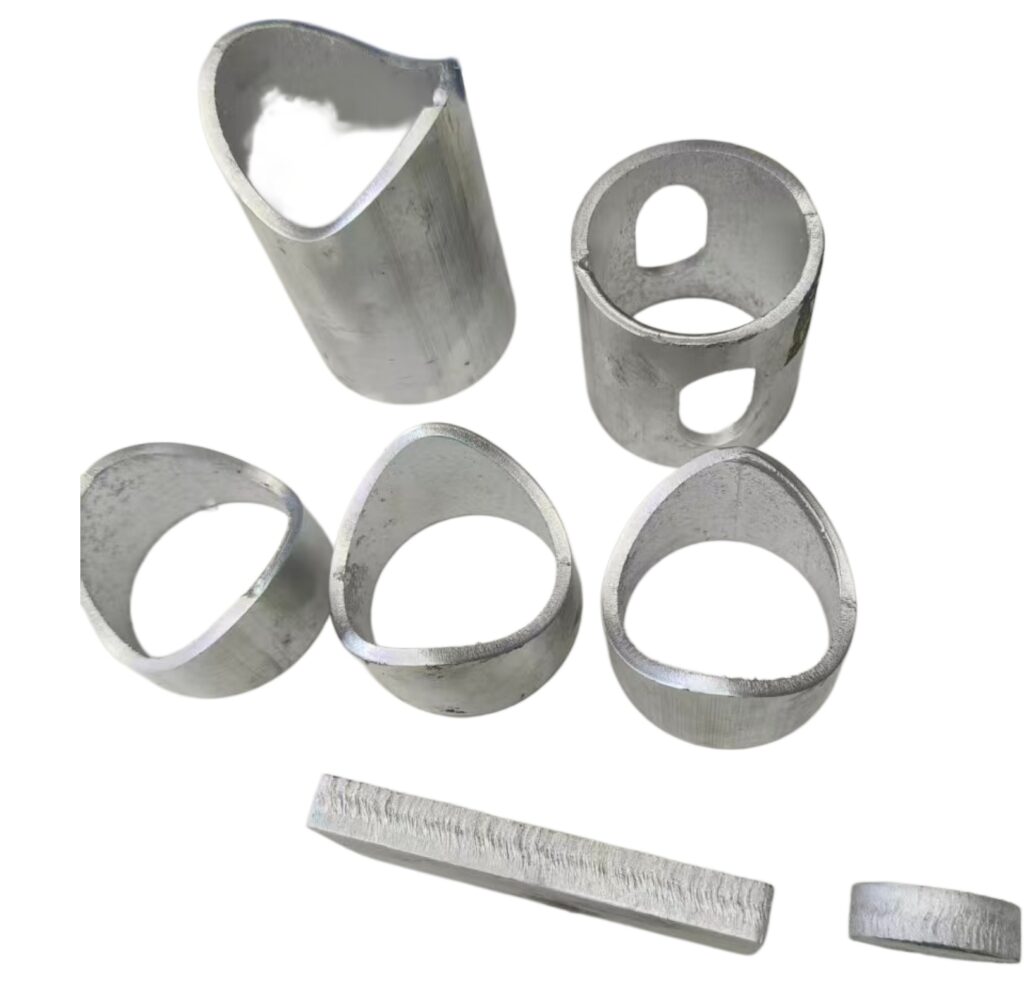
Fiber laser bevel heads tilt the beam or the whole head. Laser bevels are narrow, accurate and repeatable, and on tube they can be cut in the same program as holes, slots and the cut to length. The limit is thickness: at an angle the beam travels through more metal than the wall is thick, so a section that cuts easily square may be beyond the source once it is tilted.
Machining with pipe beveling machines, edge mills or lathes produces a cold, oxide-free face and holds the land tightly. It is the usual route for J-grooves, for alloys that do not tolerate a heat-affected face, and for critical pipework. It adds a separate operation and handling.
Grinding by hand is still how many small jobs and repairs get their bevels. It is flexible and slow, and the angle and land vary from one end to the next.
What Changes When You Cut a Bevel With a Laser
The geometry is the first thing to plan around. Tilting the head lengthens the path through the wall, and the steeper the angle, the more material the beam has to get through, so the power needed for a given wall goes up with the bevel angle.
The land is where accuracy shows. A land that is meant to be even all the way round a pipe end will grow and shrink if the tube is out of round or the head loses its height, and the welder sees it at once: the root pass burns through where the land is thin and fails to fuse where it is thick. Measuring the land at four points around the circumference, rather than at one, is the quickest way to tell whether the problem is the cut or the tube.
Assist gas changes the face. Nitrogen leaves a bright, oxide-free bevel that can usually go straight to welding; oxygen on carbon steel cuts faster but leaves a thin oxide layer that many procedures ask to be ground back before the root pass. The kerf the beam removes is small, and how it shifts finished dimensions is the subject of kerf in laser cutting.
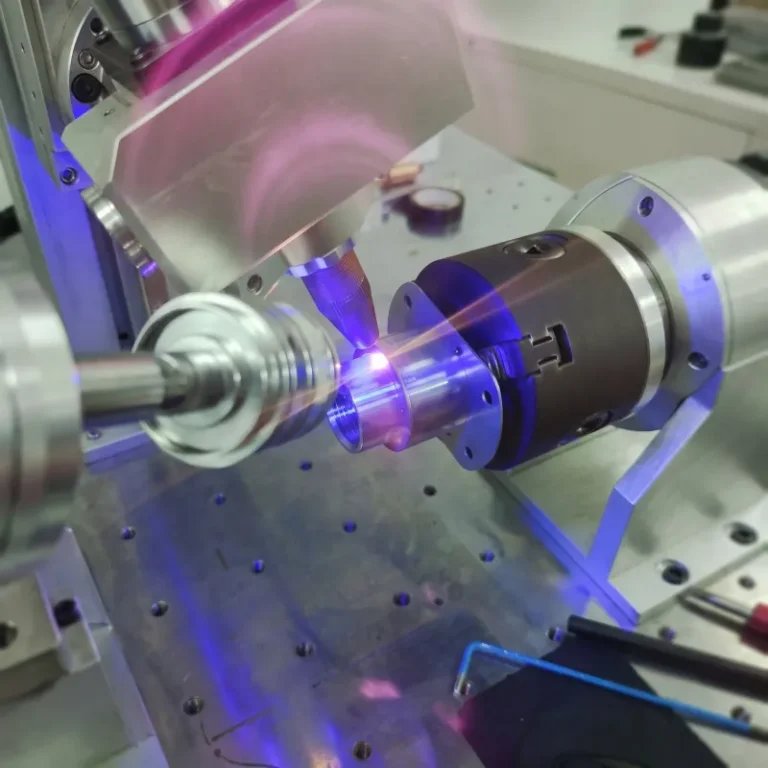
On our tube laser cutting machines, the bevel work is done on the 2460 Bevel configuration, which carries the Raytools bevel cutting head. It accepts round tube between 20 and 240 mm in diameter, so pipe that used to go from the saw to a separate beveling station can come off the machine cut to length and prepped in one setup.
That configuration also takes stock up to 6,000 mm long. The point for a fabricator is that standard pipe lengths load as they arrive, without being cut down first to fit the machine.
If you are weighing whether to bring bevel prep in-house, the wall thickness, the material and the joint detail from your welding procedure will decide most of it. Send those over, and the reply will name the configuration that fits and anything still to confirm on your parts. Tell us the wall thickness
When Another Method Is the Better Choice
Some edges are still better off elsewhere. Very heavy plate and thick-wall pipe beyond what the source can cut at an angle still go to oxy-fuel, plasma or machining. J-grooves and tight-tolerance lands on critical pipework are usually machined. One-off repairs rarely justify programming a machine at all, and a grinder does the job.
Where laser bevels pay off is in repeat work on tube and pipe in the thin to medium wall range: frames, railings, process piping spools, furniture and machinery parts, where the same joint is prepped hundreds of times and every end has to fit the same way. For flat stock, our tube and sheet laser cutting machines list a bevel head among their options.
Common Questions
Is bevel cutting the same as chamfering?
Not quite: a chamfer is usually a small edge break, while a bevel is a weld-prep cut through most of the thickness.
What bevel angle should I use for welding?
Use the angle and land in your welding procedure or the applicable code. For pipe, a 37.5-degree bevel with a small land is the common North American standard, but plate joints and other codes call for different details.
Can a laser cut a bevel on pipe?
Yes. Tube lasers with a bevel head cut the bevel in the same setup as the cut to length, holes and slots, within the wall thickness the source can handle at that angle.
Do I need to grind a laser-cut bevel before welding?
Often not when the bevel was cut with nitrogen. Oxygen-cut carbon steel leaves a thin oxide layer that many procedures require to be removed, so check the procedure.
Why does my root pass burn through in some spots and not others?
Check the land at several points around the joint. A land that varies in width, from an out-of-round tube or inconsistent cutting height, is the usual cause.
Related
Equipment
Further reading
Get in touch
- Tell us the wall thickness, the material and the joint detail you weld to.